



















Colony Flow Level 111 Walkthrough guides you through one of the game’s trickier midgame stages, where managing your green 50 stack becomes the key to progression.
This level introduces timing challenges and resource bottlenecks that punish inefficient moves, so knowing which pipes to prioritize and when to commit your green stack makes the difference between smooth completion and repeated failures.
This walkthrough focuses on the clearest play strategies: optimal pipe placement, when to deploy your green 50 stack for maximum impact, and how to avoid the common traps that stall most players.
You’ll get practical step-by-step moves and the core mechanics that unlock consistent success on Level 111.
Colony Flow Level 111 Walkthrough
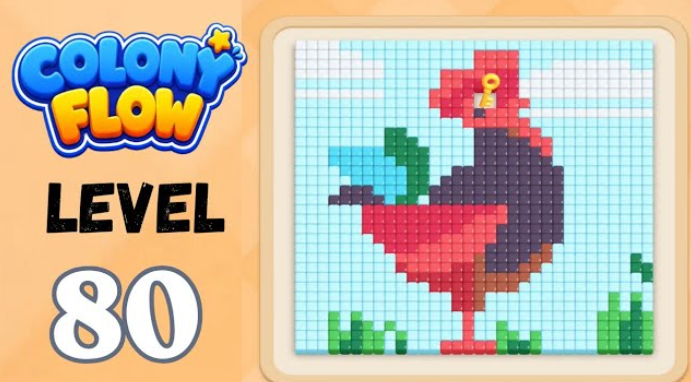
Colony Flow Level 111 shows a purple bird perched on a branch above a cyan water strip. The solution depends on strict routing order: dark body traffic must claim the single hole before green highlights or cyan water cells can safely enter.
Start with purple 20 to open the branch route, then send blue 25 and dark-blue 30 to feed the lower body and tail path. Only after those dark waves are moving can you promote green 50 for the lime highlights across the head, back, and belly.
Hold cyan 16 until the lower lane clears, then finish with late purple, navy, and black stacks to complete the tail edge, branch shadow, and outer contour.
How to PLay Colony Flow Level 111 - Full Solution
-
Tap purple 20 first. Move it from the top shelf into the far-left active pad to open the branch route and begin filling the lower body cells.
-
Send blue 25, then dark-blue 30. These waves feed the branch underside, belly edge, and early tail path through the single hole.
-
Promote green 50 after the dark traffic is moving. Green clears the lime highlights on the head, back, and belly. Sending it early crowds the entrance with scattered cells.
-
Use purple 40 and pink 30 for the upper wing and back ridge. Leave a short pause between taps if the hole remains crowded.
-
Hold cyan 16 and later cyan refills until the lower lane opens, then clear the bottom water strip and side accents.
-
Finish with late purple, navy, and black stacks to complete the tail edge, branch shadow, and outer contour.
Colors in this level: Purple, Blue, Cyan, Green, Pink, Black
Common Mistakes
-
Opening with green 50 too early strands dark bird-body traffic behind scattered lime highlights.
-
Sending cyan into the water strip before the branch underside has started blocks the lane that late navy and black cleanup need for the tail edge and shadow.
-
Promoting purple 40 and pink 30 back-to-back while the first branch wave is jammed stalls the upper wing and forces late dark refills to wait.
Why Timing Matters
Purple20 is the essential first stack because it claims the branch and lower body before any other color can safely share the hole. Blue 25 and dark-blue 30 follow immediately to establish the route for the bird body and branch underside.
Green 50 only clears scattered highlight cells. If it enters before the dark branch and belly waves are moving, green ants park on those small bright patches and block the entrance that the larger purple and navy cleanup still needs.
Cyan handles the water strip and side accents, but early cyan traffic blocks the same lane that late navy and black stacks need to reach the branch shadow and tail. Wait until the lower branch route is stable before sending cyan.
Related Games
- Colony Flow Level 20 Walkthrough — This guide is a useful follow-up for players who want to compare Level 111’s required purple 20 opening with the routing priorities of an earlier purple stack.
- Colony Flow Level 25 Walkthrough — Players struggling with the blue 25 timing in Level 111 can use this walkthrough to better understand how blue traffic should be sequenced through constrained routes.
- Colony Flow Level 30 Walkthrough — This related walkthrough complements Level 111’s dark-blue 30 and pink 30 timing, especially for learning how to avoid clogging a shared entrance lane.
What should I tap first?
Start with purple 20. Level 111 opens from an empty active row, and that first purple wave claims the branch and lower bird body before blue, dark-blue, green, or cyan can safely share the single hole.