
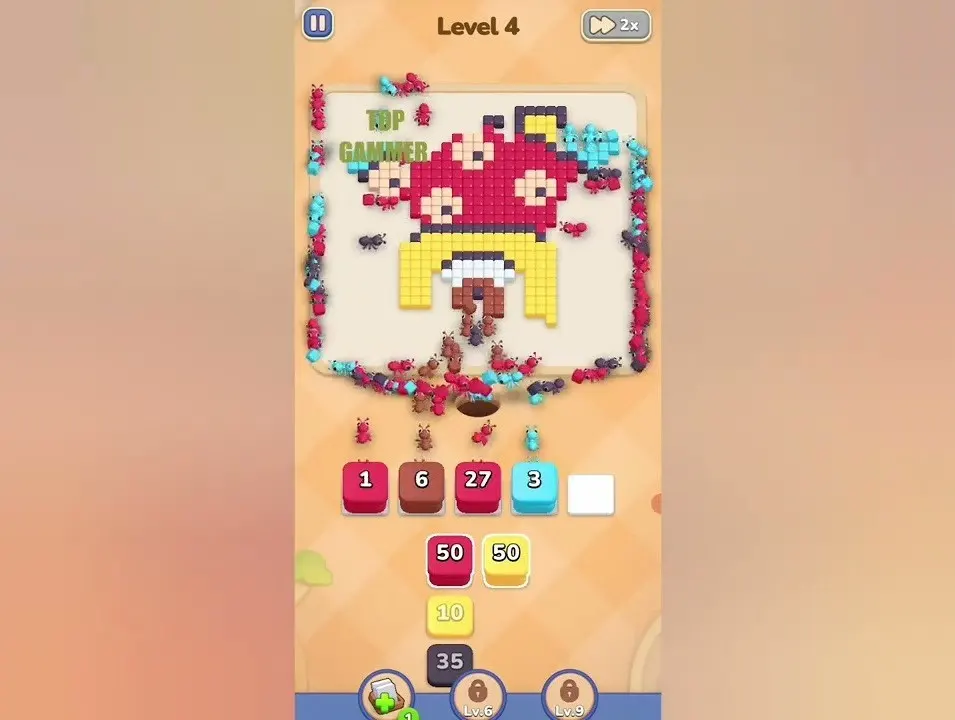
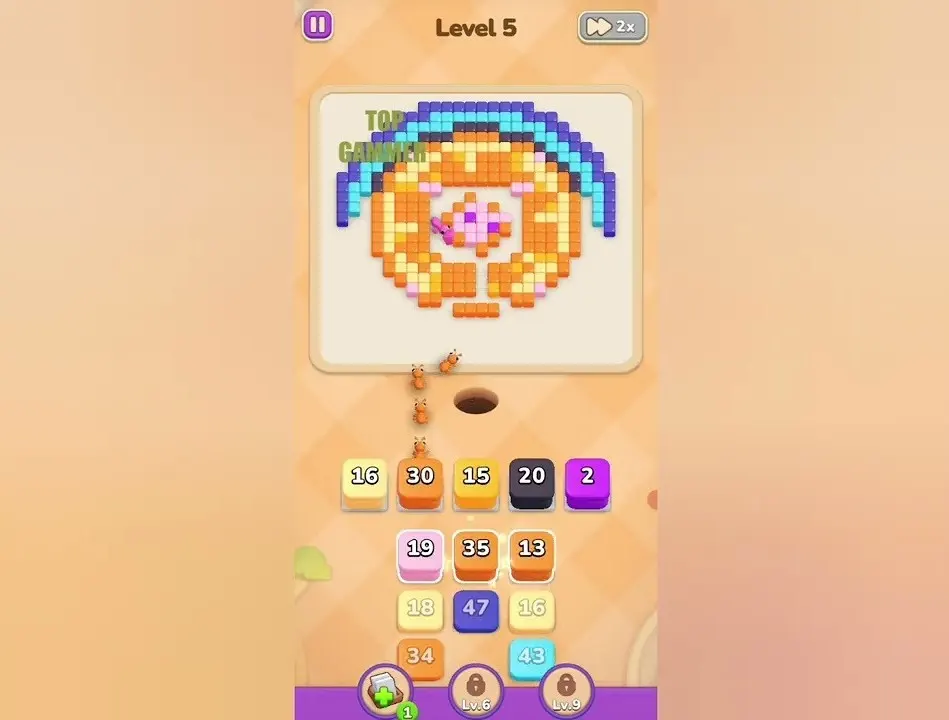
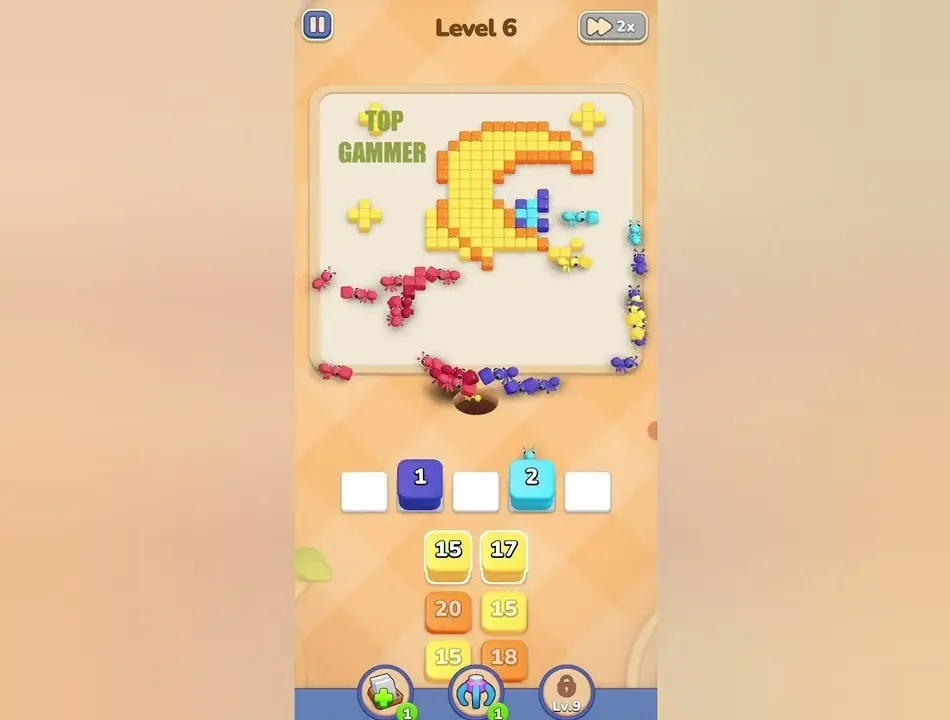

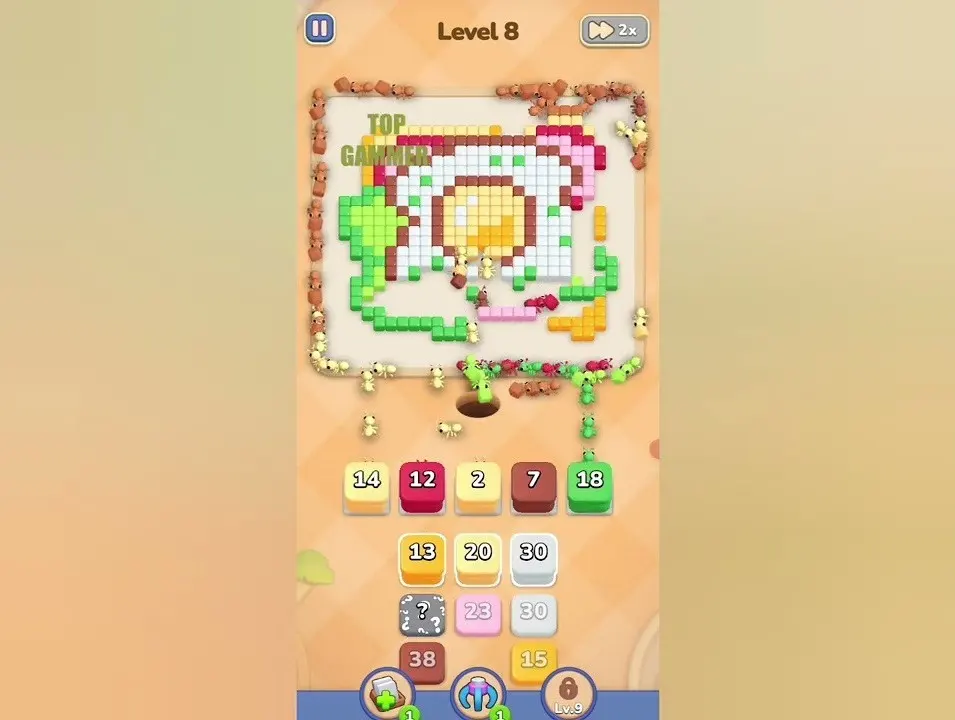













Colony Flow Level 26 Walkthrough guides you through one of the game’s trickier puzzle stages, where you must connect matching colors across a grid without crossing paths or leaving gaps.
Level 26 introduces tighter spaces and more complex color patterns than earlier stages, making it easy to box yourself in if you don’t plan your flow paths carefully. This walkthrough focuses on the solve order that clears the board efficiently.
You’ll find the optimal starting moves, which color pairs to connect first, and how to avoid the common dead-end patterns that force restarts.
How to Solve Colony Flow! Level 26 — Full Walkthrough
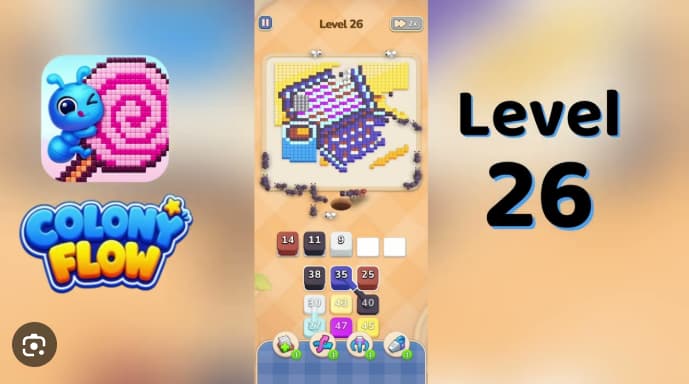
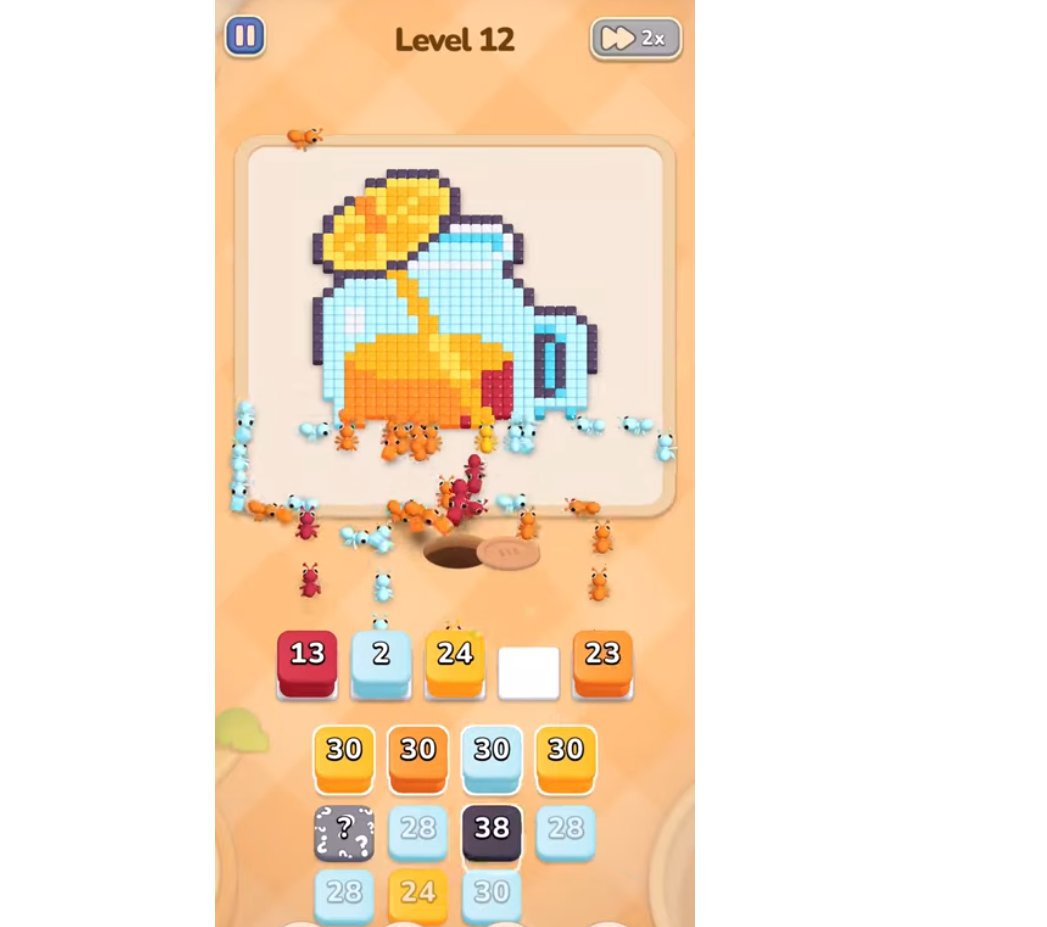
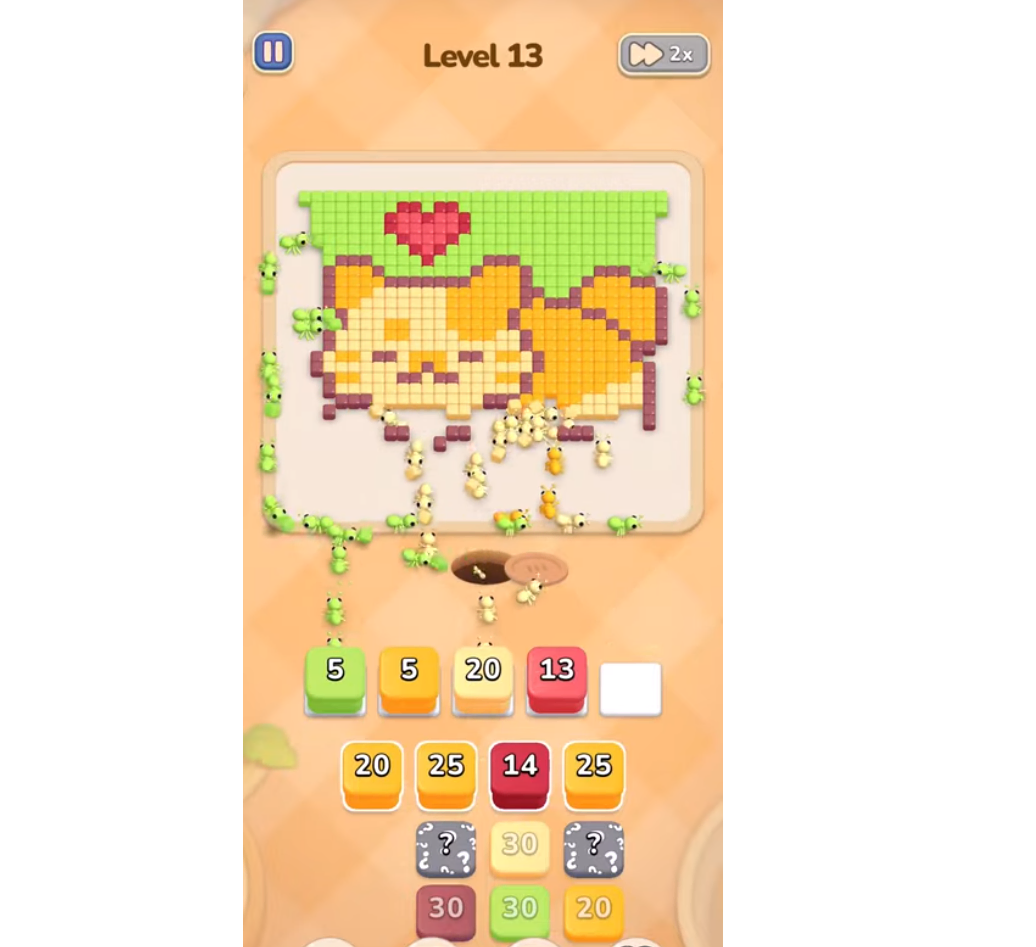
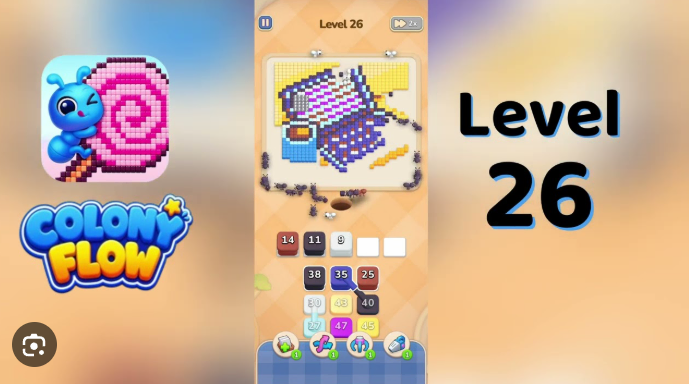
Colony Flow! Level 26 presents a honey-pot image on a shared-path board. The 5-cell top row holds green 7, red 6, orange 14, gray 25, and black 23, while a 4×3 source grid supplies refills. All ants share a single dirt path to the ant hole, so clearing the outer layers—grass, rim, and pot body—before releasing inner detail colors prevents traffic jams. Keeping at least one queue slot open ensures the next required refill can appear.
Full Solution
-
Tap green 7 in the far-left top-row cell. Green ants walk up to the grass cells closest to the ant hole and begin clearing the bottom edge of the honey pot. Wait until the lower grass edge starts disappearing before tapping the next stack.
-
Tap orange 14 in the third top-row cell. Orange clears the pot rim and outer flower petals. Leave one beat between green and orange so the grass is mostly cleared before rim cells start processing.
-
Tap red 6 in the second top-row cell once orange has started moving. Red clears the brown pot body. Space this wave one beat behind the orange refill rising from the second row.
-
Wait for green, orange, and red to clear the dirt path between the ant hole and the bottom edge of the pot. Do not tap the green 40 stacks in the third row yet, and do not let yellow 17 from the second row rise into the active queue during this beat.
-
Tap the larger green stacks in order:
- Green 40 (third row, third cell)
- Green 40 (third row, fourth cell)
- Green 30 (fourth row, third cell)
These finish the grass rug around the pot base. Hold gray 25 and gray 28 for one beat so green can clear the grass perimeter before any shadow color is sent.
-
Tap yellow 17 (second row, first cell), then yellow 30 (second row, fourth cell). Yellow lights up the inner flower petals and the small honey highlight on the rim. Tapping yellow before orange 14 clears the rim strands yellow ants on remaining rim cells.
-
Tap white 34 (second row, third cell), plus the small white refill that rises from lower rows. White clears the small highlight cells on the grass around the pot. White shares the path with every other color, so save it for late game when most of the silhouette is already colored.
-
Finish with orange 25 (second row, second cell), gray 25 (third row, first cell), gray 28 (third row, second cell), red 20 (fourth row, first cell), and black 23 (far-right top-row cell). Orange25 clears the last rim cells, gray stacks clear the pot shadow, red 20 clears the last pot body cells, and black 23 clears the pot outline and the bee-like silhouette inside the flower. The board clears once the last matching cube is routed off.
Colors in this level: Green, Red, Orange, Yellow, Black, White, Gray
Path Strategy and Common Mistakes
The safe route order is green grass, orange rim, red pot body, followed by larger green batches and inner detail colors. This outside-to-inside approach opens the honey-pot silhouette before yellow, white, gray, and black compete for the same dirt strip.
Path Strategy
- Clear the exposed perimeter first. Green opens the grass base, while orange and red remove rim and body bottlenecks.
- Wait between early colors. Green, orange, and red all use the same narrow route. A short pause lets each wave start clearing tiles instead of piling up in transit.
- Treat large stacks as queue risks. Green 40, gray, and white batches occupy valuable waiting space. Send them only when enough path is open for a full run.
- Hold inner colors until the silhouette is open. Yellow, white, and gray are safer once grass and rim have thinned out.
- Keep a queue slot available. A full five-cell waiting area prevents the next needed refill from appearing, creating a stall even when the correct color is still on the board.
Common Mistakes
- Sending yellow 17 before orange 14 finishes the rim: Yellow ants stop on remaining rim cells, leaving orange unable to route behind them.
- Tapping black 23 too early: Black outline traffic blocks the gray 25 and gray 28 shadow sequence and strands black ants on remaining pot cells.
- Letting the 5-cell top row refill completely: No open slot leaves no room to queue the next required color, stalling the route until one active batch finishes.
- Releasing gray stacks during green cleanup: Gray is better saved until outer grass and pot layers are open.
Quick Tips for Colony Flow! Level 26
- Tap green 7, orange 14, and red 6 from the top row in that order so grass, rim, and pot body clear together before any large refill reaches the dirt path.
- Hold black 23 for final cleanup. Black uses the same path as grass, rim, and body ants; a premature tap strands black ants on remaining pot cells and blocks the gray refill behind them.
- Save yellow 17, yellow 30, white 34, gray 25, and gray 28 for mid-to-late game. They are inner flower, grass highlight, and pot shadow colors. The win condition is an empty board after the honey pot image clears.
- Watch the dirt path, not just available stacks. Send the next block when the current wave has started clearing its first targets.
- If the board feels crowded, pause after a large stack instead of adding another color immediately.
Related Games
- Colony Flow Level 25 Walkthrough — Level 25 is the closest preceding challenge for practicing Colony Flow’s color-stack order and shared ant-path timing before tackling Level 26’s larger honey-pot board.
- Colony Flow Level 23 Walkthrough — This walkthrough offers another late-game Colony Flow routing puzzle for players who need more practice holding back blocked colors until the active path has cleared.
Enjoy!