
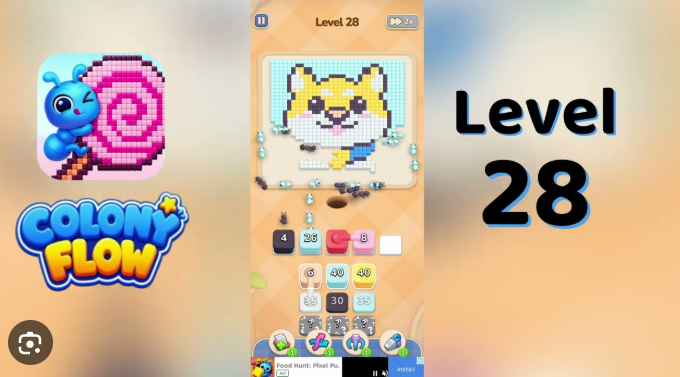
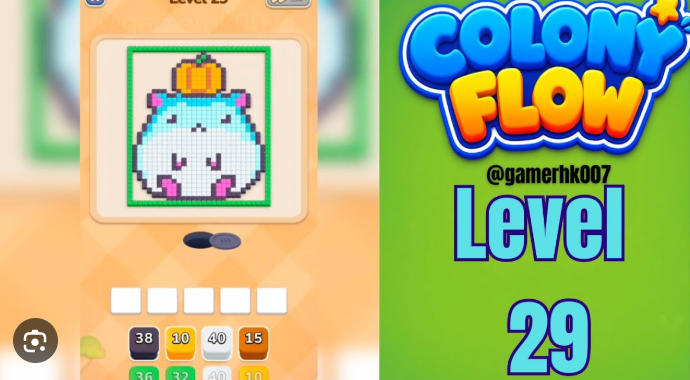
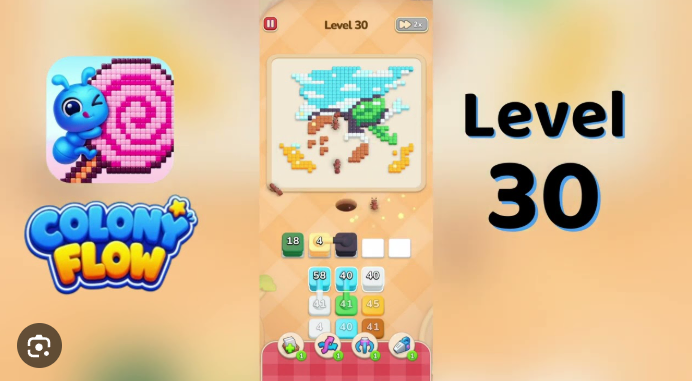
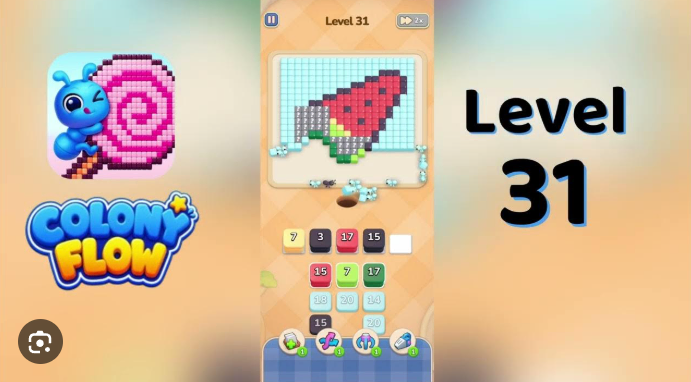
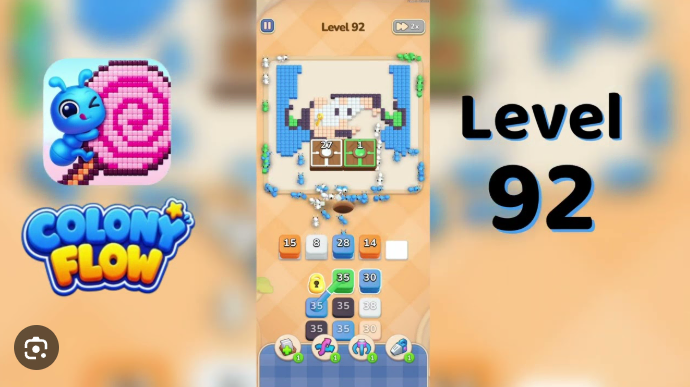
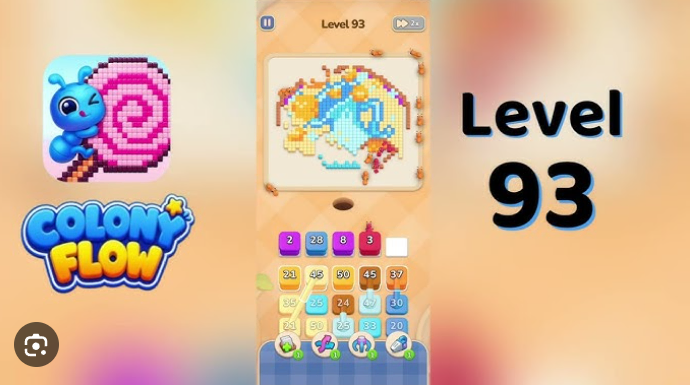
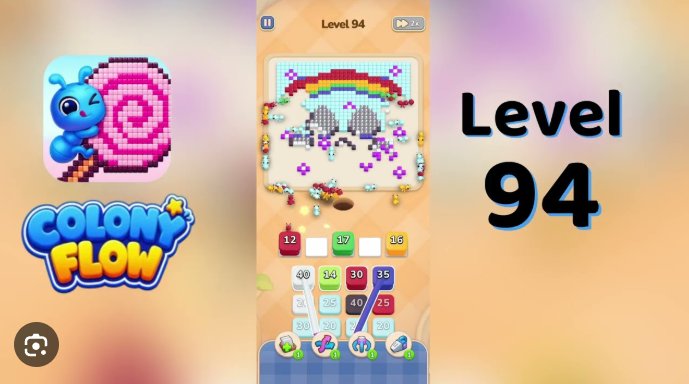
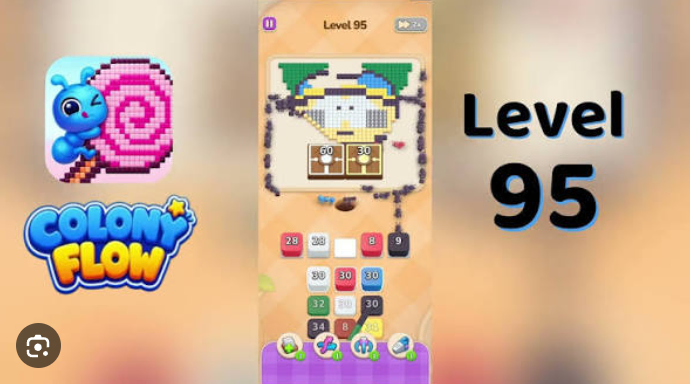
Colony Flow Level 50 Walkthrough is a puzzle game that challenges you to connect matching colors across a grid while filling every cell—think flow puzzles with a colony-building twist.
Level 50 ramps up difficulty with tighter spaces, more colors, and limited room for error, making it one of the trickiest stages in the game. This walkthrough covers the full solve path for Level 50, breaking down which connections to prioritize, where bottlenecks form, and how to avoid common dead-ends.
You’ll find the exact sequence that clears the board, along with key mechanics like corner starts and edge management that apply to hard Colony Flow levels generally.
How to Solve Colony Flow! Level 50 — Full Solution
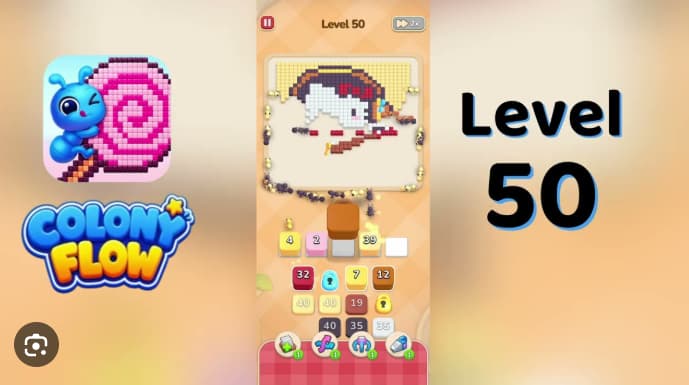
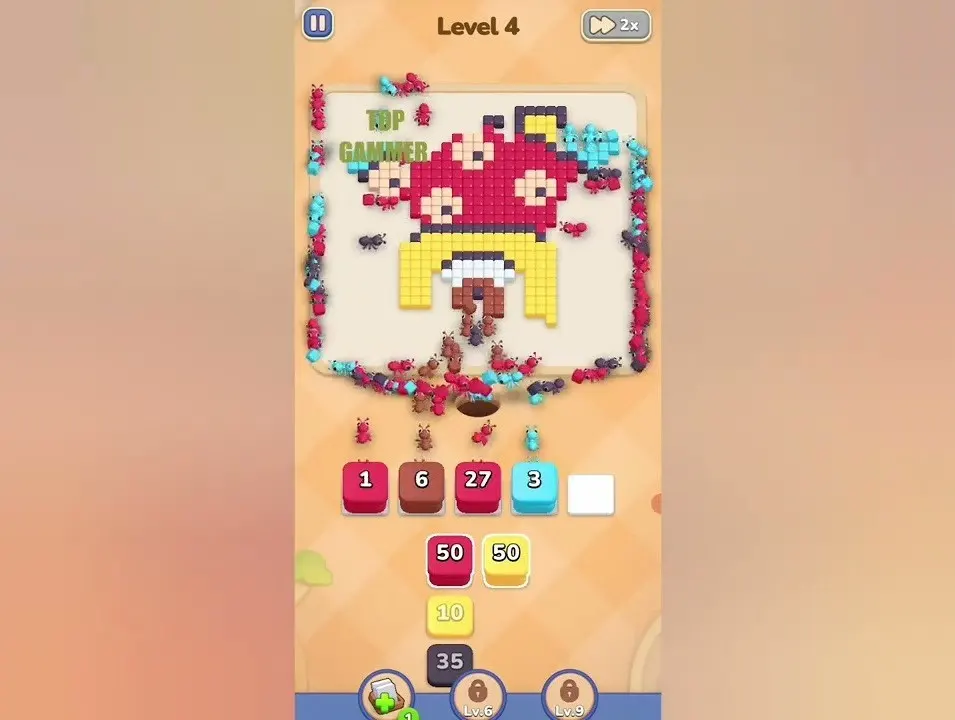
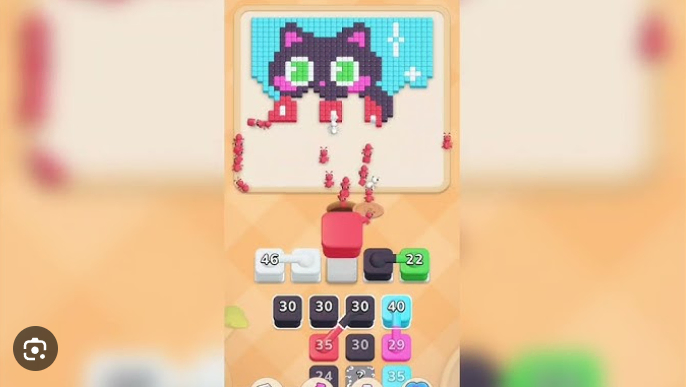
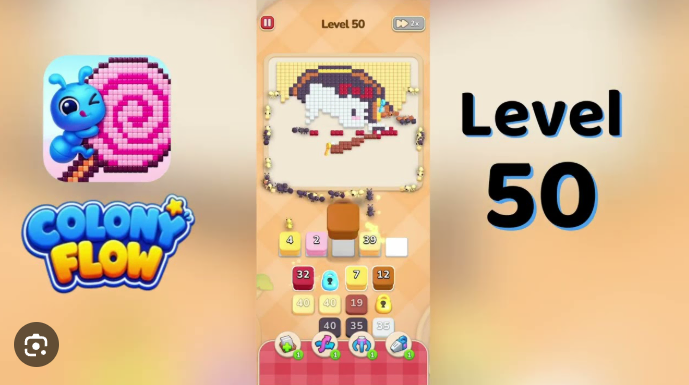
Colony Flow! Level 50 presents a Hello Kitty-style portrait where dark hair, white face, red bow, blue jacket, pink cheeks, and yellow background all share one route. The small black stacks must frame the portrait before the large white and blue regions arrive. Clear the five active-row stacks first, then release source-row stacks only after each wave has moved through the shared dirt path.
Colors in this level: Black, White, Brown, Yellow, Blue, Red, Pink, Green, Gray
Tap the black 2 stack in the far-left active-row cell.
Black ants walk up to the dark brown hair band at the top of the portrait. Wait for the first black ants to clear the bottom edge before tapping the next stack.
Tap the white 7 stack in active-row cell 2.
Whiteants start clearing the white face cells in the middle of the portrait. Leave one beat between black and white so the dark hair cells are mostly cleared before the white face cells start clearing.
Tap the black 3 stack in active-row cell 3.
Black ants continue clearing the dark hair band. Leave one beat after the white wave so face is at least half-cleared.
Tap brown 15, then yellow 10, in active-row cells 4 and 5.
Brown ants trace the outline wrapping the Hello Kitty silhouette, and yellow ants start clearing the yellow background. Leave one beat between each wave so the hair band and face are mostly cleared before the outline and background start clearing.
Clear source row 1: black 35 → blue 24 → white 38 → black 40
Tap each stack as it rises into the active row. Black clears the last dark hair and two small eye cells, blue starts clearing the blue jacket across the lower body, white clears the rest of the white face, and black clears the last outline cells. Leave one beat between each wave so the hair band and face are at least half-cleared before the blue jacket starts clearing.
Clear source row 2: gray 40 → pale yellow 40 → pink 4 → brown 12
Gray clears small outline accent cells, pale yellow clears more yellow background, pink clears the two small pink cheek dots, and brown clears the rest of the brown outline. Leave one beat between each wave so the jacket is mostly cleared before the cheeks and outline start clearing.
Clear source row 3: white 40 → yellow 40 → black 40
White clears the last white face cells, yellow clears the last yellow background cells, and black clears the last dark hair and eye cells. Leave one beat between each wave.
Tap the late refill waves as they rise into the empty white buffer pad.
Red (19 waves) clears the large red bow on the right ear and two small red hand cells. Pink clears the second pink cheek dot. Green clears the two small green side bows. Blue clears the last blue jacket cells. Brown, white, black, and yellow clear the remaining outline, face, hair, and background.
Common Mistakes to Avoid
-
Firing the blue 24 stack before the active row waves have cleared the perimeter. This sends blue ants across the hair band that black has to clear, stalling them on jacket cells and blocking the late blue refill waves.
-
Tapping the gray 40 stack while white ants are still walking the dirt path. This strands gray ants on outline cells and blocks the pink 4 and late pink refill waves needed to clear the chek dots.
-
Letting any late red refill wave rise before the brown hair band is mostly cleared. This strands red ants on bow cells and blocks the late red refill waves needed for the bow and hand cells.
Quick Tips for Colony Flow! Level 50
-
Clear black 2, white 7, and black 3 in that order before touching brown 15, yellow 10, or any source row stack. The dark brown hair band and white face are the two highest-traffic regions and must clear together before the blue jacket, red bow, pink cheek, or green side bow is allowed onto the dirt path.
-
Treat the active row as the opener queue and the source grid as the supply. Tap the black 35, blue 24, white 38, and black 40 in source row 1 only after the black 2 wave has cleared. Tap the gray 40, pale yellow 40, pink 4, and brown 12 in source row 2 only after the white 7 wave has cleared. Tap the white 40, yellow 40, and black 40 in source row 3 only after the black 3 wave has cleared.
-
Save the blue 24 stack and pink 4 stack for the late game. The blue jacket and pink cheeks are two of the smallest color regions, and blue and pink ants use the same dirt path as black, white, brown, and yellow. A premature blue or pink click strands ants on remaining cells and blocks the late refill waves that must rise into the empty white buffer pad.
-
Watch the white and gray timing. White needs room to reach the face before gray enters the route. If gray is released early, the pink cheek wave can become stranded.
-
Keep the empty white buffer pad available for late refills. The buffer pad is the most reliable place to absorb red, pink, green, and blue refills without preventing the next required stack from surfacing.
Board Layout and Goals
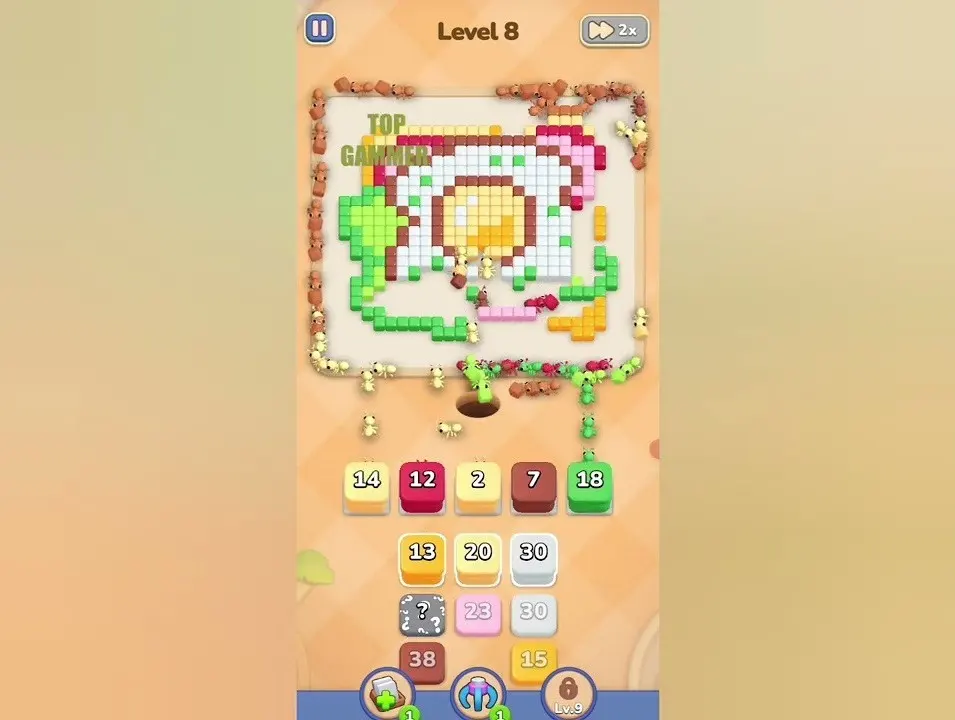
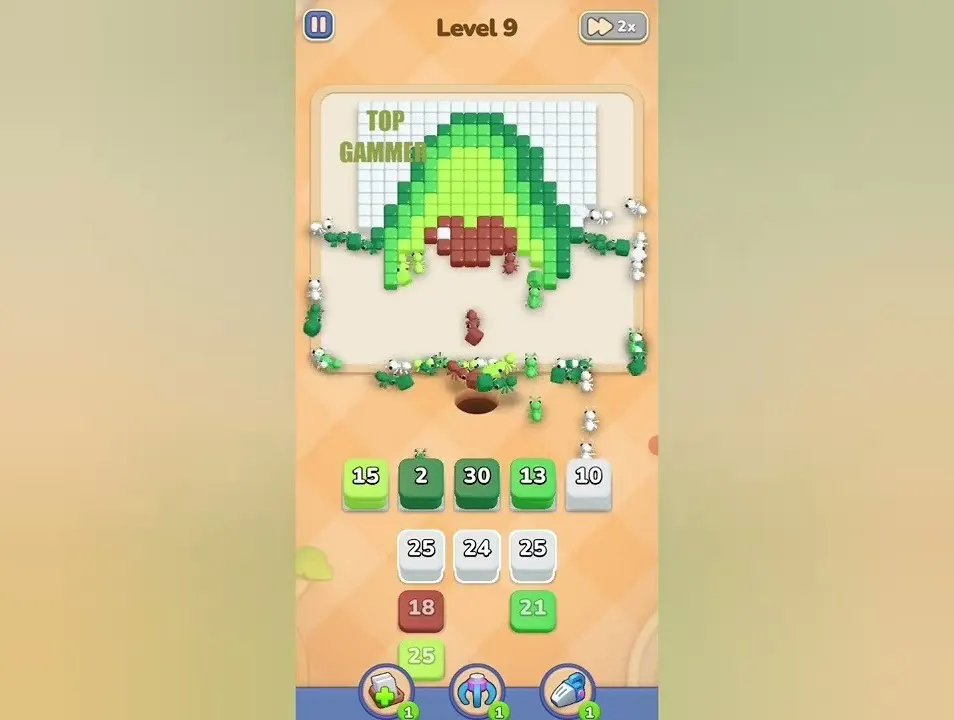
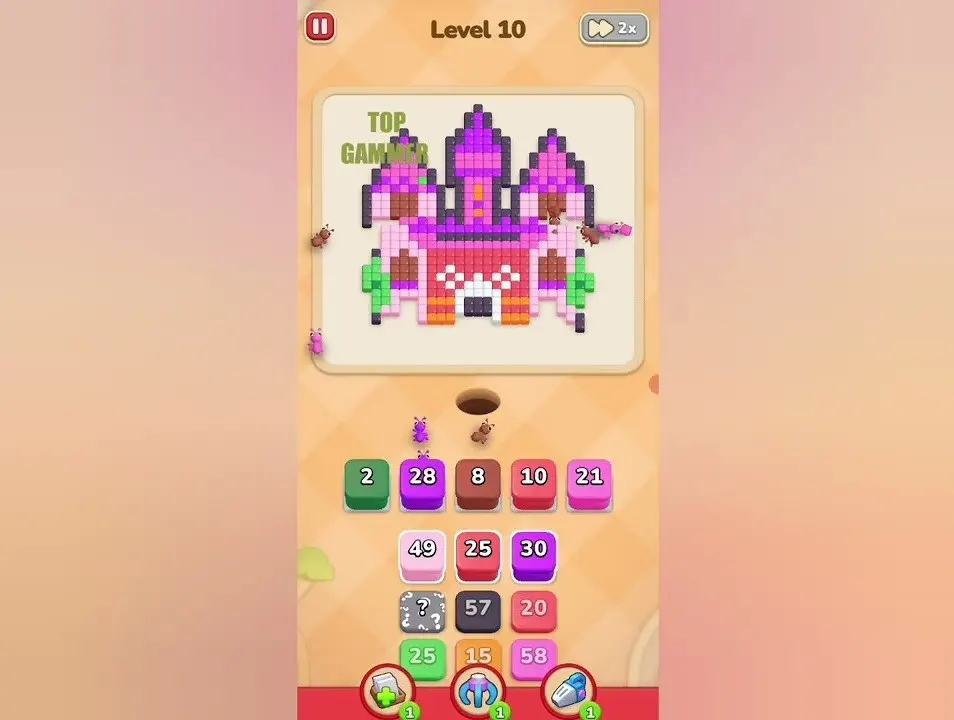
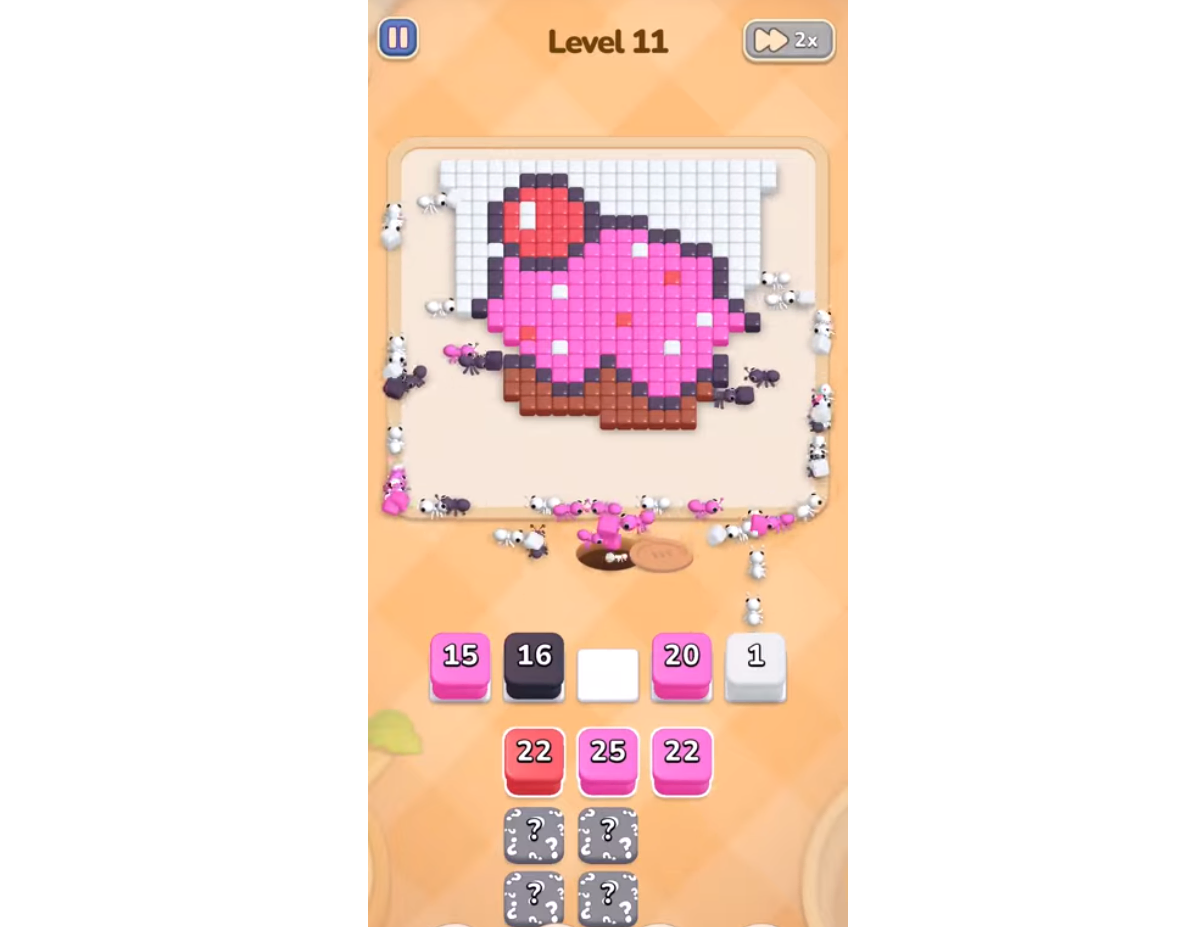
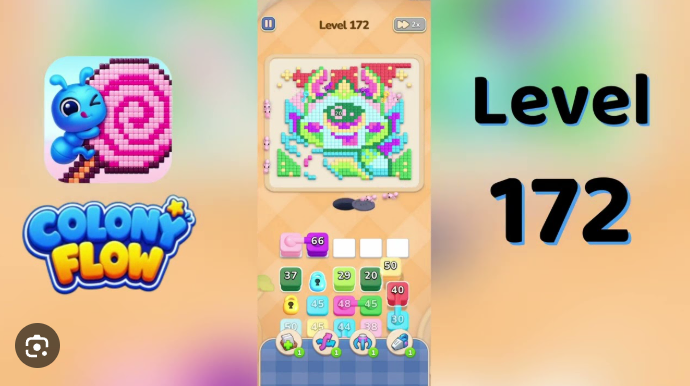
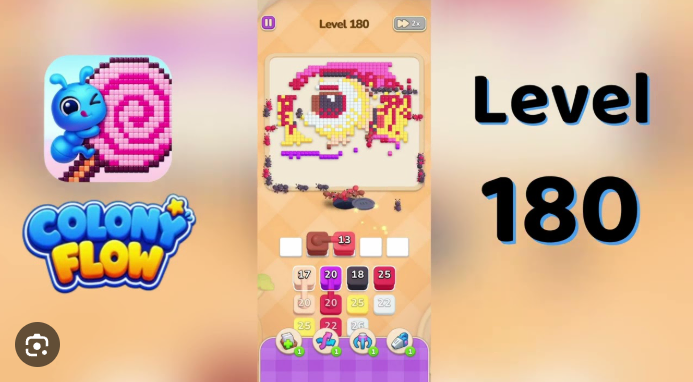
The board opens in portrait view with a Hello Kitty-style pixel-art portrait filling the top half: a dark brown hair band across the top, two small green side bows on the ears, a large red bow on the right ear, a wide white face in the middle, two small black eye cells, two small pink cheek dots, a small yellow nose cell, a blue jacket across the lower body, and two small red hand cells, all on a yellow background.
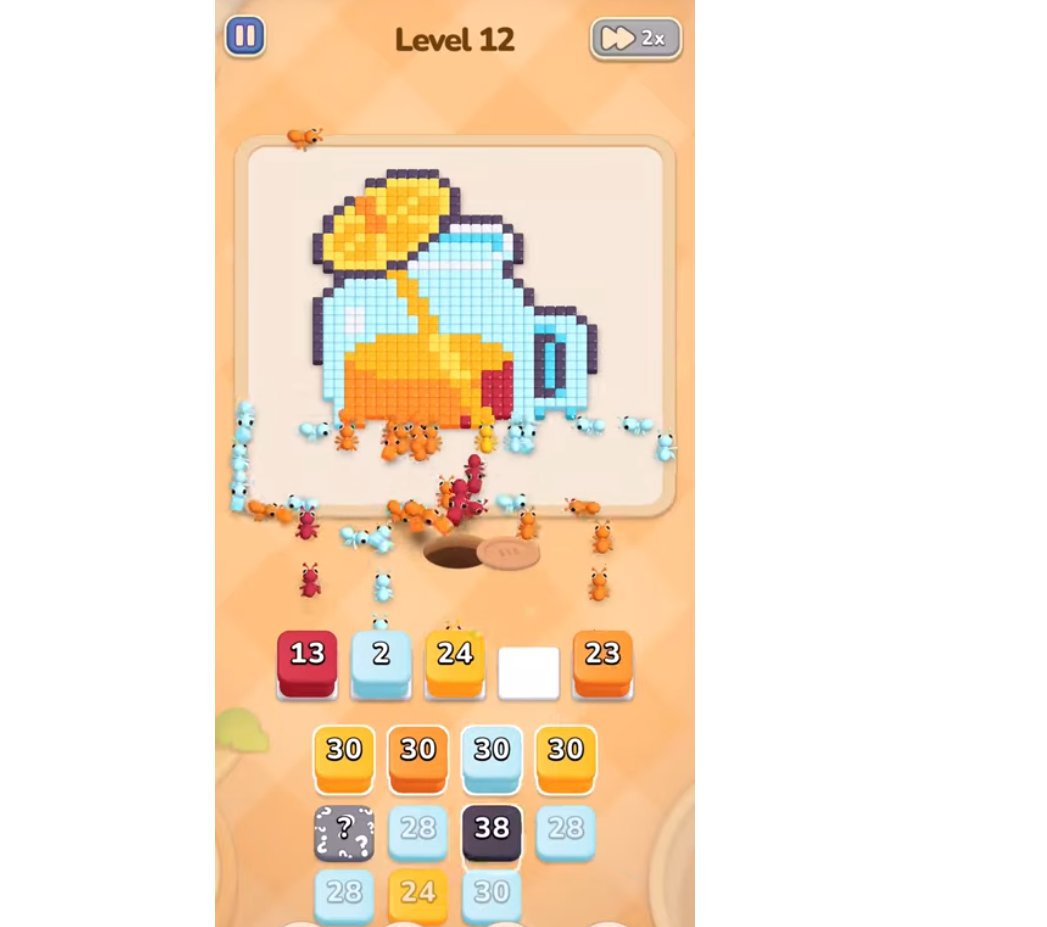
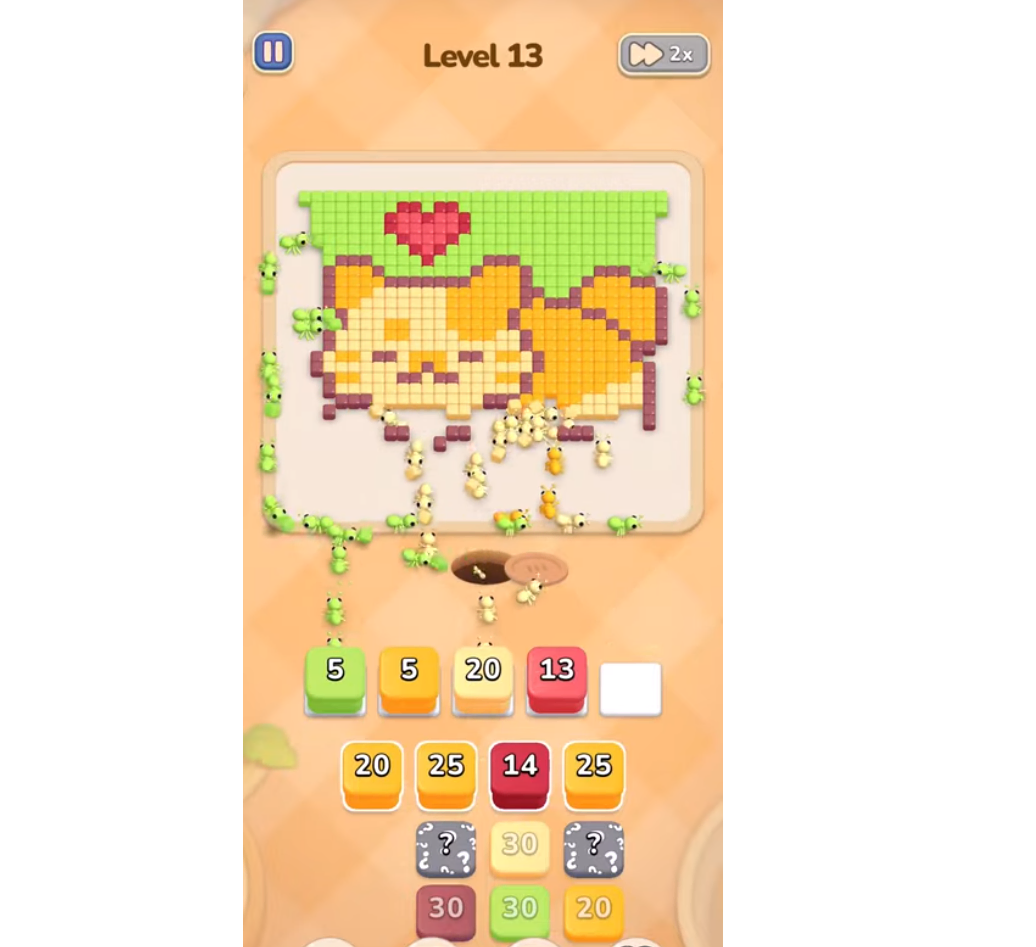
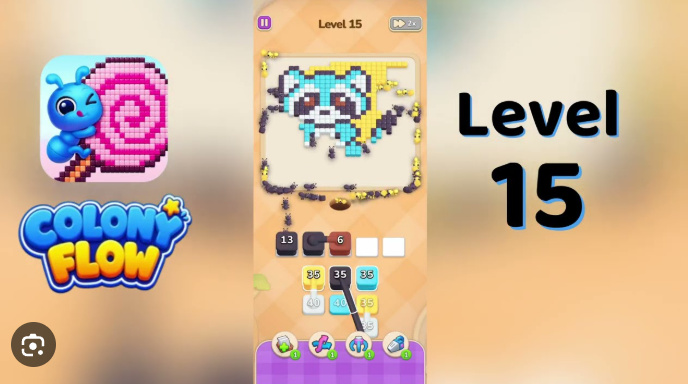
Below the portrait is a 5-cell active row plus a 3-row, 4-column source grid. The active row opens as black 2, white 7, black 3, brown 15, yellow 10 with no empty white buffer pad at the start.
Goal: Clear the color waves in an order that keeps the shared routes usable through the final refill stacks. The portrait perimeter must clear before central and late-game colors can drain safely.
Key obstacles:
-
Single shared route: All colors use the same dirt path. Lower and perimeter cells need to clear before upper or central portrait groups can move safely.
-
Limited staging room: The active row has no buffer slots at the start. The only way to free a slot for a rising refill is to drain an active row cell.
-
Timing-dependent waves: Large stacks can block the shared path needed by later colors. Release each stack only when earlier connected cells are mostly clear.
Related Games
- Colony Flow Level 40 Walkthrough — Continue practicing the color-wave timing and shared-path routing skills needed for the tightly sequenced Level 50 portrait board.
- Colony Flow Level 35 Walkthrough — This earlier late-game walkthrough offers another useful route-order puzzle for players learning to prevent stacked ant waves from blocking one another.
Enjoy!