
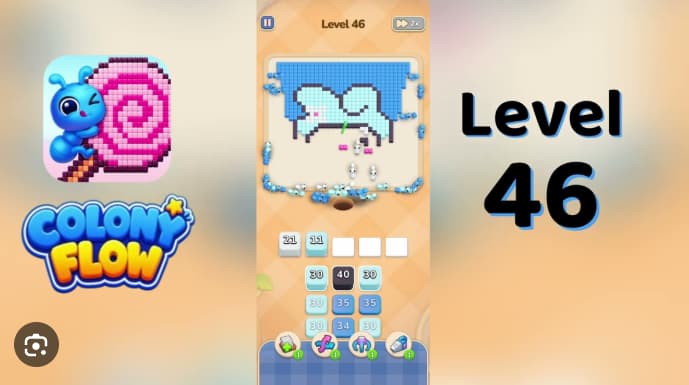
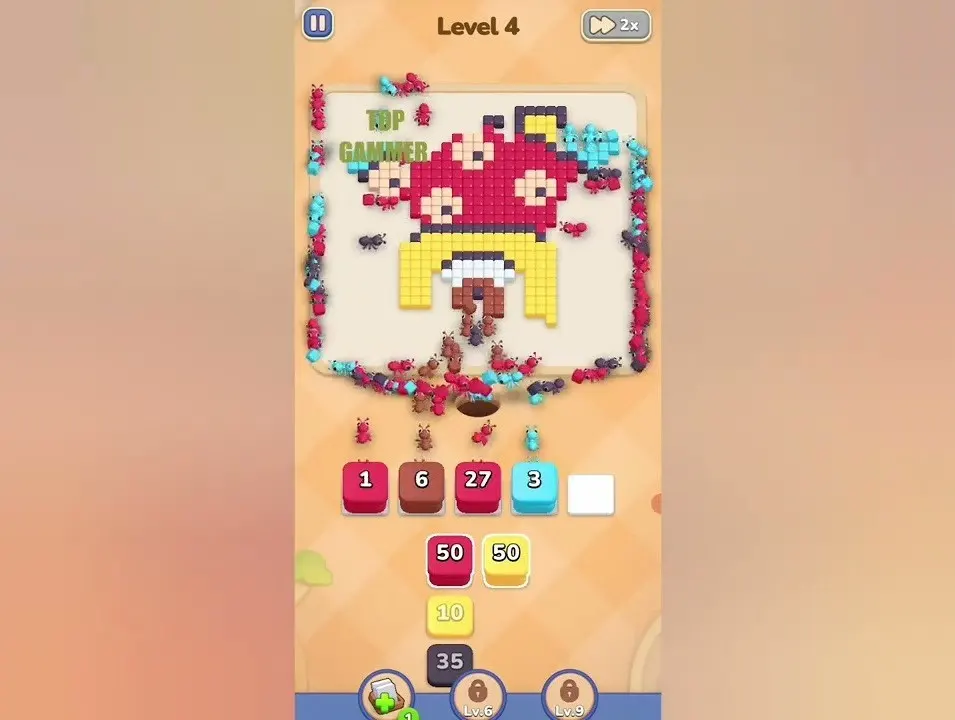
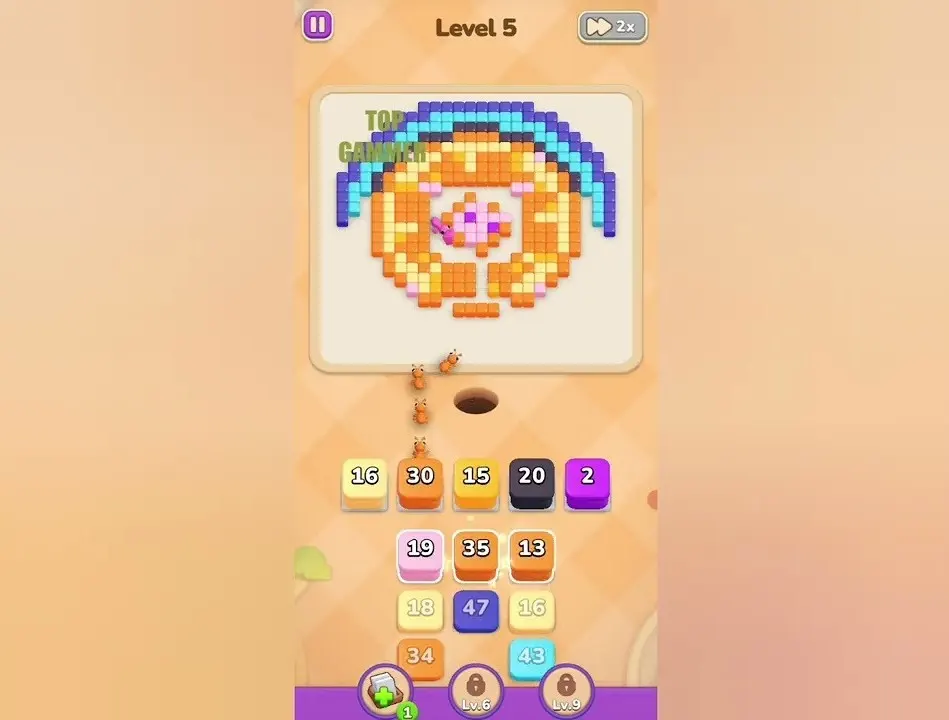
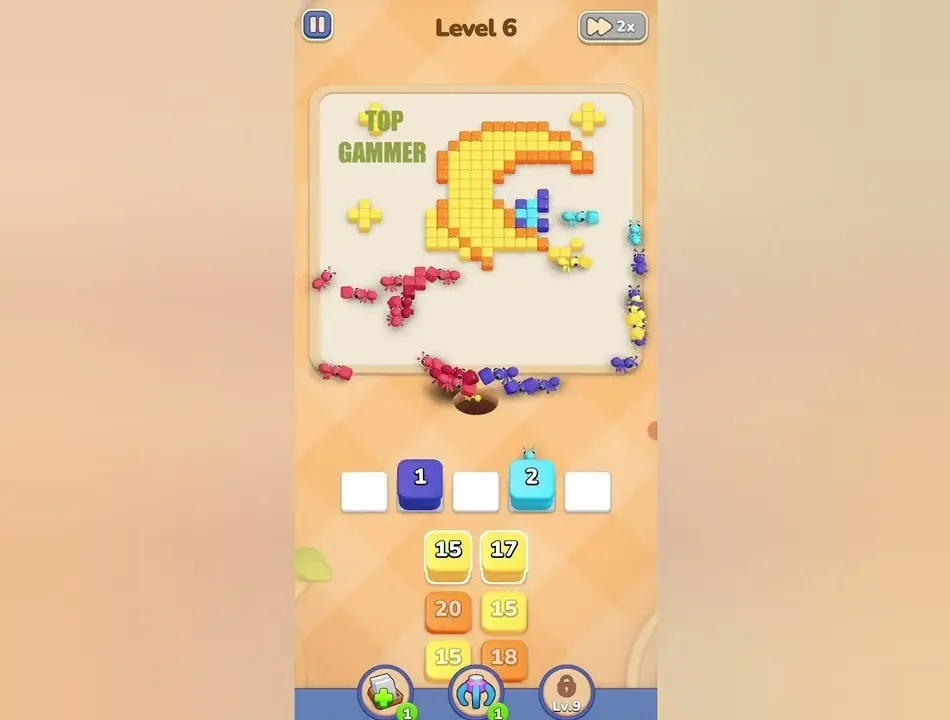
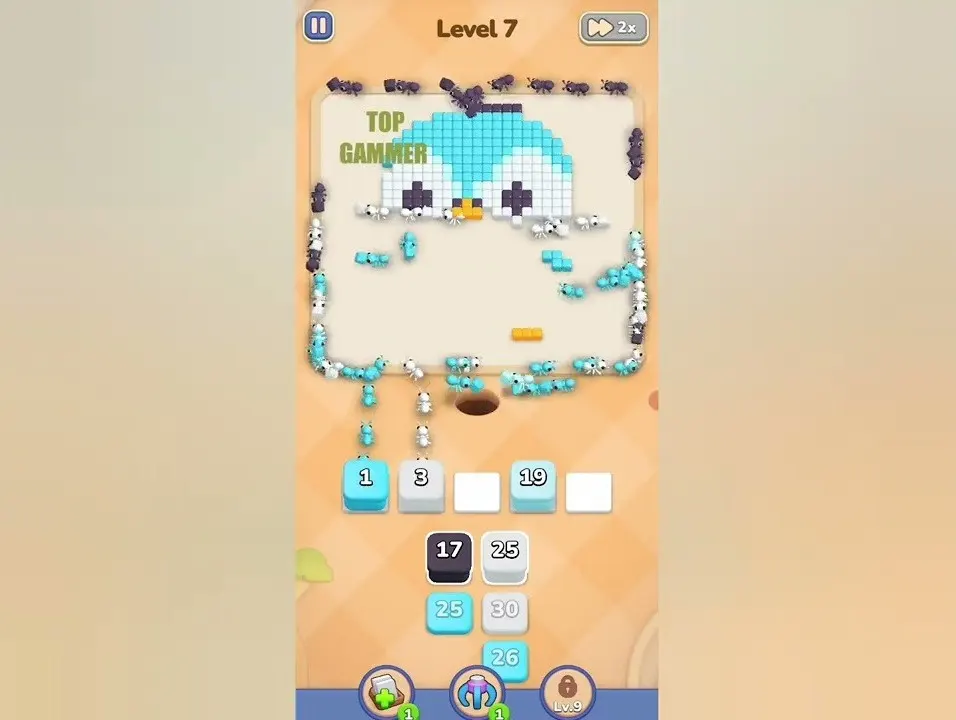
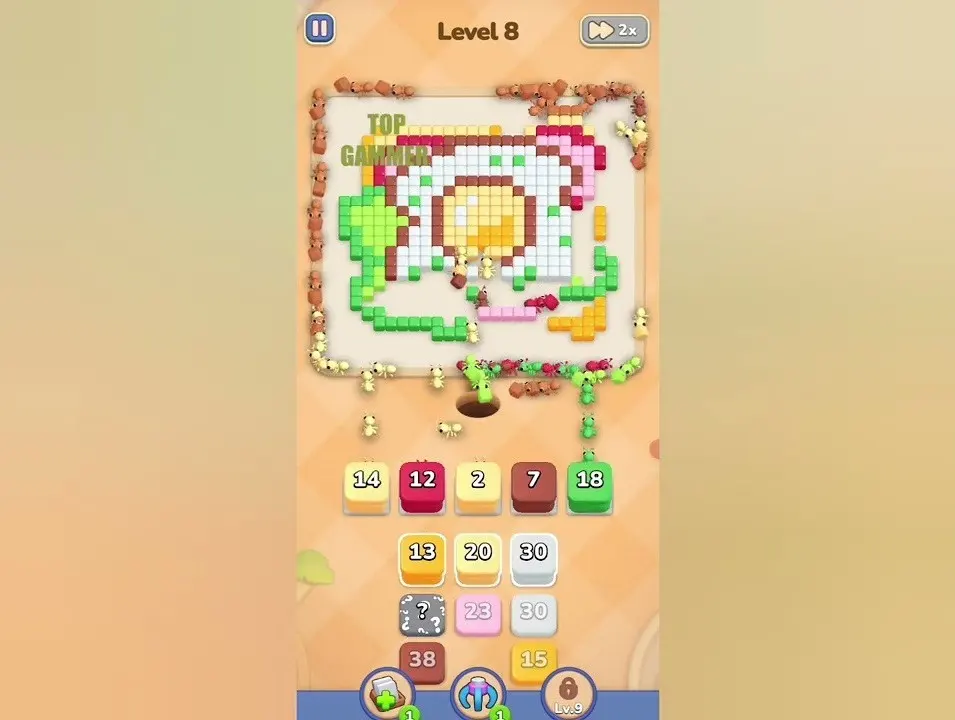
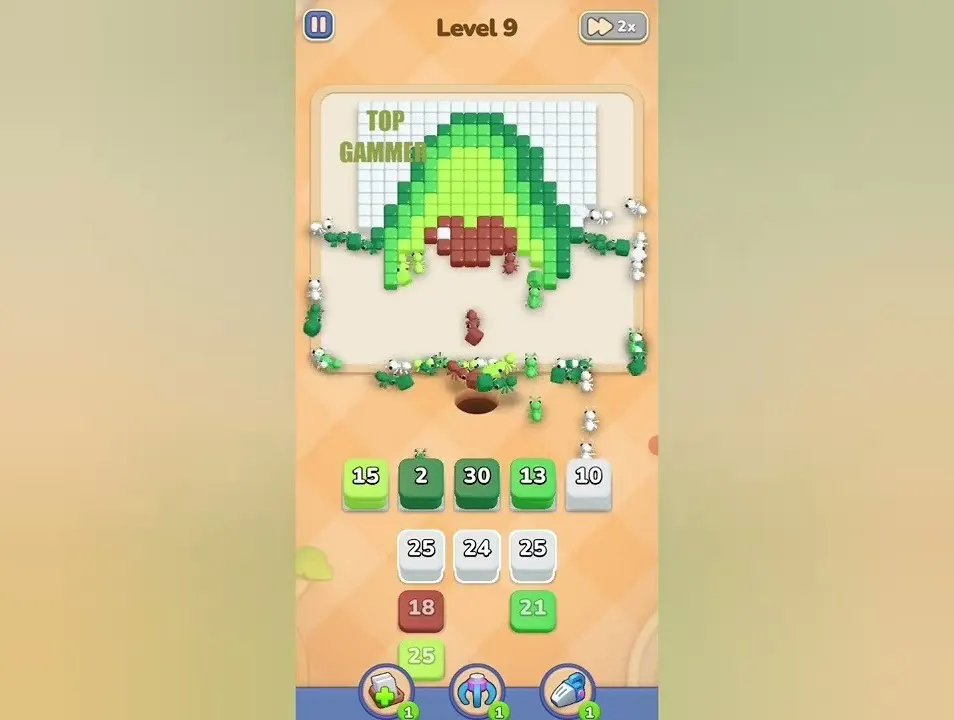
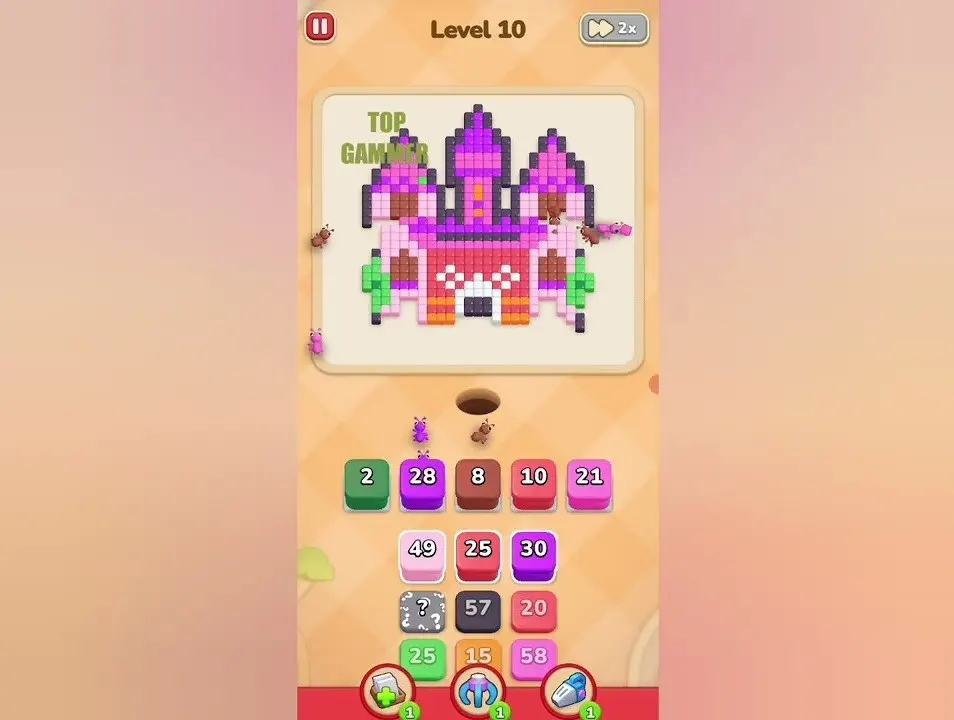
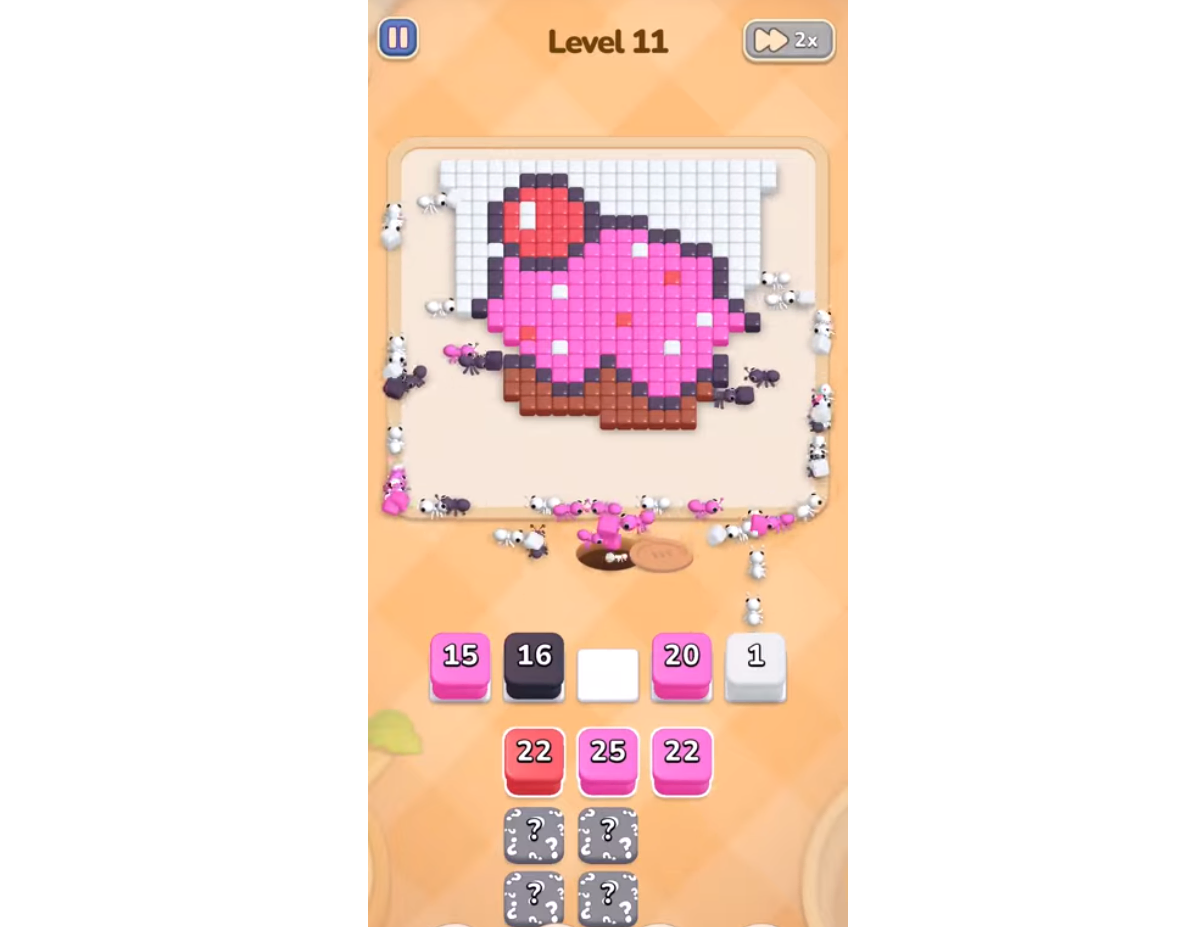
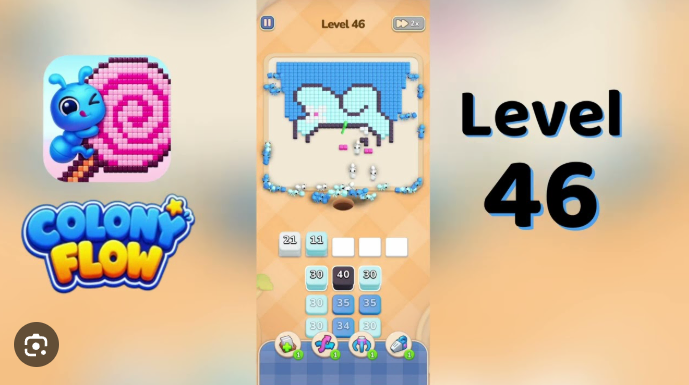
Colony Flow Level 46 is a pale-blue puppy portrait puzzle where the blue body, black outline, white muzzle, and pink cheeks all share the same route, requiring careful timing to complete the long chain of blue openers before sending the smaller face details.
The board’s single-path design means every move must follow a specific sequence to avoid blocking critical flows. This walkthrough covers the full solve strategy for Colony Flow Level 46, breaking down the exact order to trace each color section and explaining how to manage the extended blue chain without trapping the outline or detail pieces.
You’ll find the complete path sequence, key decision points where players usually stall, and the fastest way to fill the board without restarting.
Colony Flow Level 46 Walkthrough
Colony Flow Level 46 builds a pale-blue puppy portrait where all colors share one dirt path. Tap the five blue stacks in the active row first—blue 5, 11, 13, 15, and 17, left to right—to clear the lower body.
Wait one beat between each tap soants finish walking before the next wave starts. Once those five have drained, tap pink 6 in source row 1 to start the first cheek, then pale blue 56 and pale blue 30 in the same row to open the head.
Work through source row 2 (pale blue 30, 35) to fill the middle body, then source row 3 (black 43, pale blue 58, pale blue 30) to trace the outline and finish the body.
Save the empty white buffer pad in the active row for late refills: small blue waves clean up remaining body cells, then black, white, and pink refills complete the outline, eyes, muzzle, chest stripe, and second cheek.
How to Play Colony Flow Level 46
Clear the five-cell active row from left to right.
Tap blue 5, blue 11, blue 13, blue 15, and blue 17 in that order. Wait one beat between each tap so ants drain the lower pale-blue body cells before the next wave enters the shared route. Do not tap pink 6 or any source-row stack during this phase.
Start source row 1 once the blue openers have cleared.
Tap pink 6 in cell 1 and wait one beat. This clears the first cheek dot. Sending it earlier blocks the lower-body route.
Then tap pale blue 56 in cell 2, followed by pale blue 30 in cell 3, leaving one beat between waves. These stacks open the upper head area.
Clear source row 2 in sequence.
Tap pale blue 30, pale blue 35, then the second pale blue 35. These waves fill the middle body cells. Let the pale-blue ants finish walking before releasing the black outline stack.
Finish source row 3.
Tap black 43, then pale blue 58, then pale blue 30. The black wave starts tracing the puppy outline while the final pale-blue waves complete the remaining body and head sections.
Handle the refill phase.
Keep the empty white buffer pad available for the late small blue refills(22, 14, 27, 26, 5, 32, 20, 4, 28, 16, 2, 25, 9, 27, 17, 7, 1, 23, 19). Send those refills one per beat, then finish the late black 38, 14, 40, 1, 2, white 30, 35, 40, and pink 5 refill waves as they rise. The white refills complete the muzzle and chest stripe, while the remaining black and pink waves finish the outline, eyes, and second cheek.
Common Mistakes to Avoid
- Firing pink 6 too early. If you tap pink 6 before the blue active-row waves have started clearing the bottom body edge, pink ants cross the body that blue has to clear and stall on the remaining cheek cells, blocking the late pink 5 refills.
- Releasing black 43 while blue ants are still walking. This strands black ants on the remaining outline cells and blocks the late black 38, 14, 40, 1, 2 refill waves needed for the rest of the outline and the two eye cells.
- Letting small blue refills rise before the body is cleared. If the late small blue 22, 14, 27, 26, 5, 32, 20, 4, 28, 16, 2, 25, 9 refill waves rise into the empty white buffer pad before the big pale-blue 56, 30, 35, 35, 58, 30 source waves have cleared the body, the small blue refills stall on remaining body cells and block the late black refills needed for the outline and eyes.
Quick Tips
- Tap the blue 5, 11, 13, 15, and 17 in strict left-to-right order across the active row before touching any source-row stack. The bottom edge of the pale-blue body is the first region reachable from the ant hole, and the five small blue openers clear the pupy perimeter before the big pale-blue 56, 30, 35, 58 source waves enter the dirt path.
- Walk the source grid in column order after the active row is drained. Pink 6 in source row 1, column 1 starts the first chek. Pale blue 56 and 30 in source row 1, columns 2 and 3 flood the head. Pale blue 30, 35, and 35 in source row 2 clear the middle body. Black 43 plus pale blue 58 and 30 in source row 3 start the outline and finish the body. Tap late refills only after the matching source column has cleared.
- Save the empty white buffer pad in the fifth cell of the active row for late cleanup refills. Filling it with a source-row click instead strands the refill waves and leaves the outline, eyes, muzzle, chest stripe, and second cheek empty.
Related Games
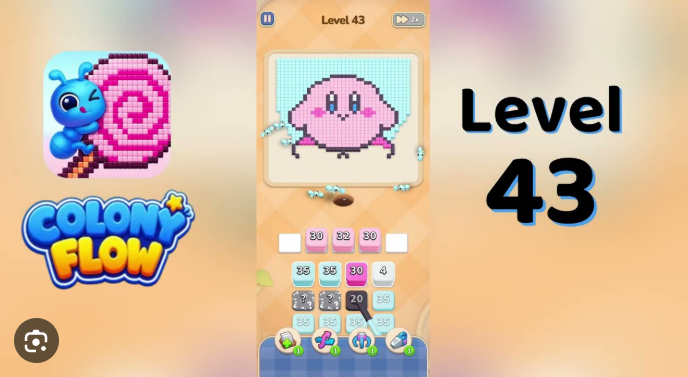
- Colony Flow Level 43 Walkthrough — Continue with another late-game Colony Flow puzzle that similarly rewards careful stack timing and route management.
- Colony Flow Level 35 Walkthrough — This walkthrough offers another practical sequence-based solution for players practicing the color-wave ordering used in Level 46.
- Colony Flow Level 30 Walkthrough — Players looking for an earlier Colony Flow challenge can use this guide to build familiarity with active-row and source-stack timing.
How do I start Colony Flow Level 46 without clogging the trail?
The clean opening is the blue 5 stack at the far left of the active row, then blue 11, 13, 15, and 17 in strict left-to-right order. This dispatches five blue ants up the dirt path in the first five beats and starts clearing the bottom edge of the pale-blue body before the pink 6, the big pale-blue 56, 30, 35, 35, 58, 30, and the black 43 source waves enter the dirt path. Tap pink 6 only after all five active-row blues have cleared, then walk the source grid in column order, and let the late small blue, black, white, and pink refill waves clear the empty white buffer pad in the fifth cell of the active row.