


























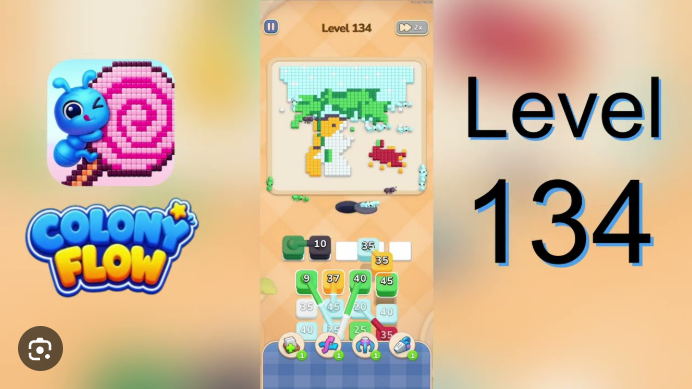
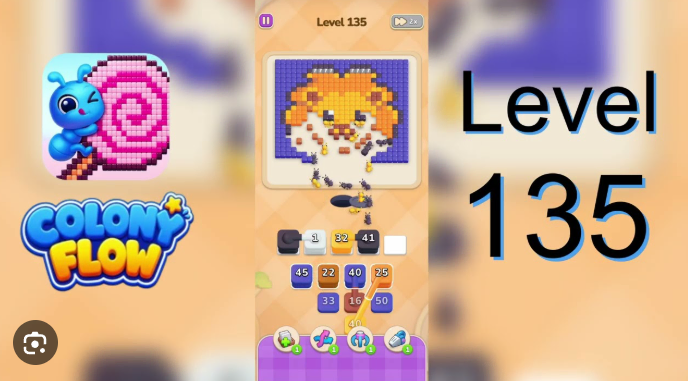
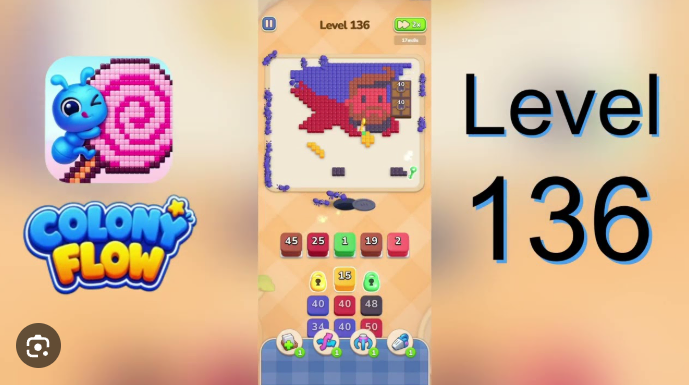
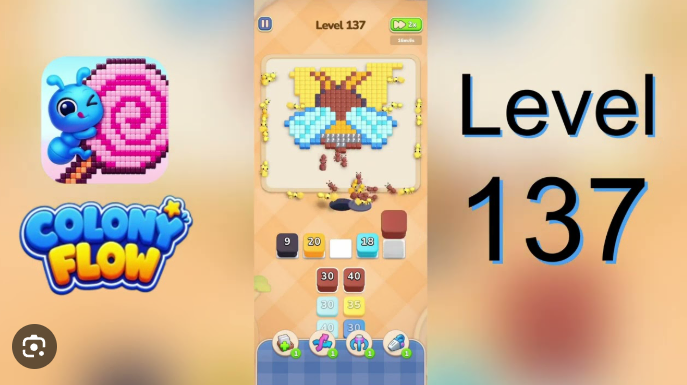














Colony Flow Level 123 requires letting the pale-cyan family control the midgame while you manage early expansion and late-game pressure.
This walkthrough covers the specific opening moves that set up pale-cyan dominance, the timing windows where you can safely build around their expansion, and the endgame transitions that let you reclaim board control without triggering a collapse.
Colony Flow Level 123 Walkthrough
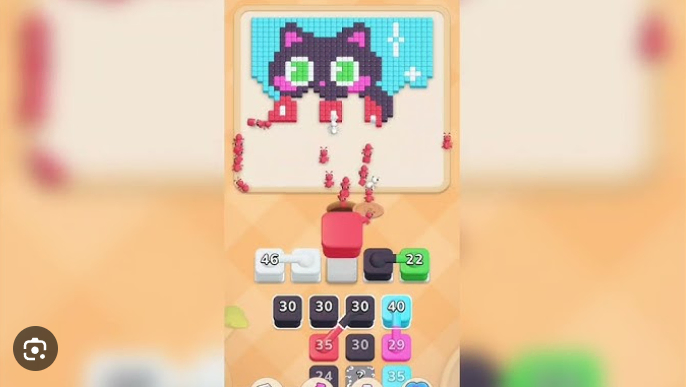
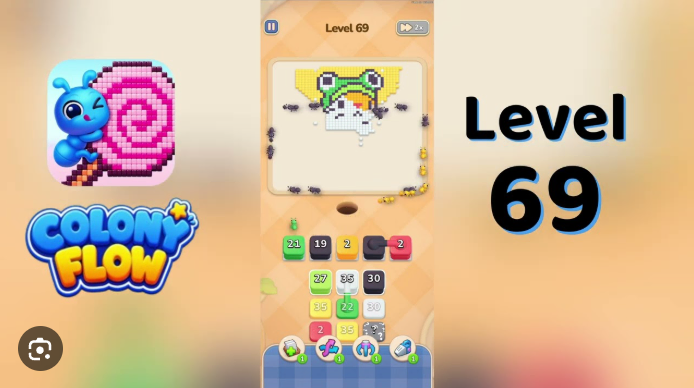
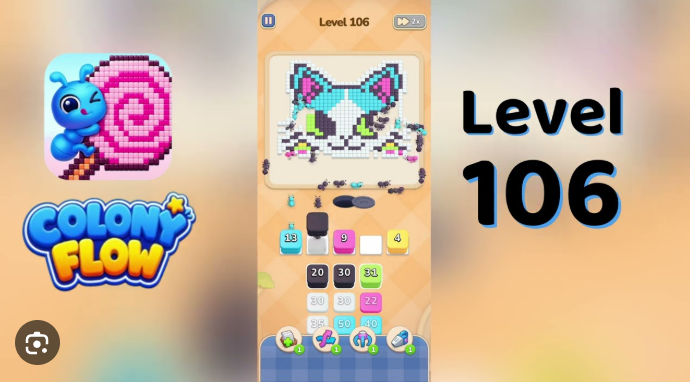
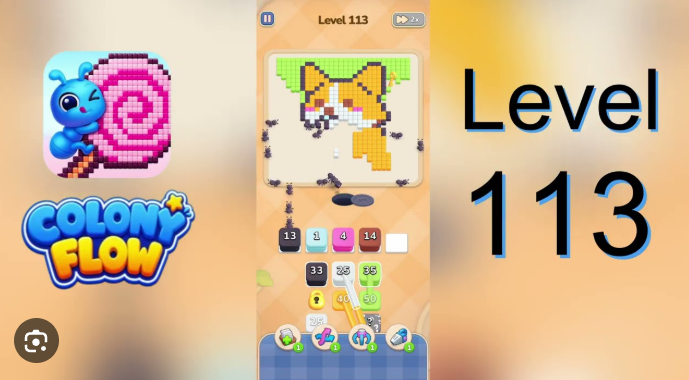
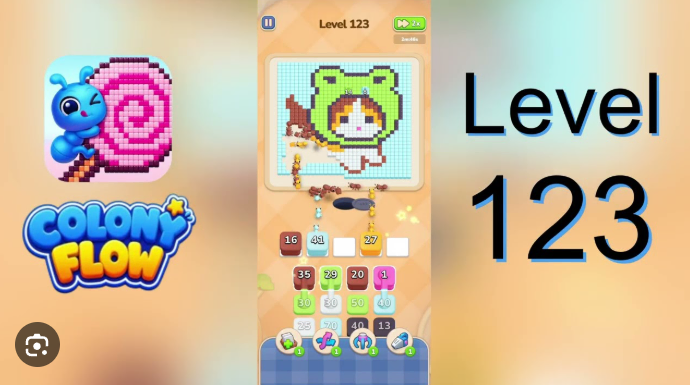
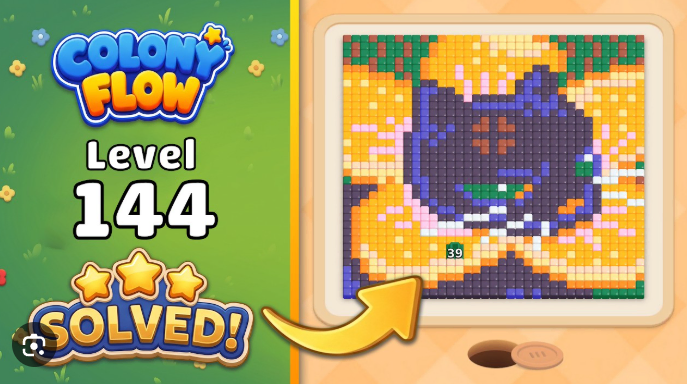
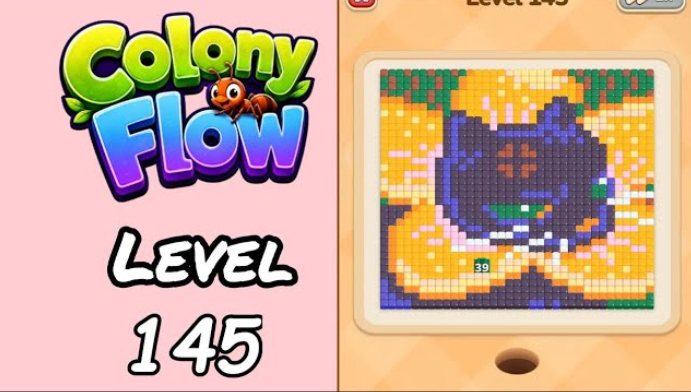
Colony Flow Level 123 is a frog-hood cat portrait with a single ant hole. The challenge: yellow trim and brown outline must open the route first, because the long pale-cyan background cleanup, delayed green hood fills, and late oversized white body wave all fight for the same path.
Start with yellow 45 to begin the left hood trim and shoulder band. Follow with maroon 47 and the brown contour stacks (brown 25, dark-brown 35) to establish the tail curve, lower chin line, and left outline. This frames the board before bigger colors arrive.
Feed the pale-cyan background family through the hole once the contour lane is moving—left wall and bottom strip first. Keep one active pad open or the queue jams.
Hold the frog-hood greens (green 29, green 50) until the background route is already open. Green targets high outer cells, so releasing it early parks ants across the top rim and slows everything.
Start the white body phase only after the chin line and most of the lower cyan band are underway. Route the early white stacks, then the later oversized white refill, to clear the cat face, chest, and torso while threading the pink nose and dark hood-eye details through the same lane.
Finish with the late cleanup: promoted pale-cyan corner cleaners, navy 13, tiny dark hood details, and final white filler stacks. The level clears when the top-left cyan pocket, right hood rim, and last white body squares land together.
How to Play Colony Flow Level 123 - Step-by-Step Strategy
Tap yellow 45 first.
Clear the left frog-hood trim and shoulder band before crowding the active row.
Send maroon 47, brown 25, and dark-brown 35.
Build the tail curve, chin line, and outer contour. These outline pieces give later traffic safe landing zones.
Route the early pale-cyan stacks.
Target the left wall and bottom strip. Keep one active tray pad free—consecutive pale-cyan promotions can jam the single-hole queue.
Hold green 29 and green 50 until cyan is moving.
Once the background route is active, clear the frog-hood crown and side lobes. Releasing green too early fills the top rim and blocks later cleanup.
Release the white body stacks late.
Wait until the chin line and lower pale-cyan band are stable, then clear the face, chest, and torso. Fit in the pink nose and dark hood details as space opens.
Finish the delayed cleaners.
Clear the top-left pale-cyan pocket, right hood rim, navy 13, remaining dark hood details, and final white filler squares.
Common Mistakes
-
Releasing green 29 or green 50 early parks ants along the top rim before the lower route is ready.
-
Triggering the oversized white body refill too soon floods the face and torso, delaying the tail curve, chin line, and final pale-cyan corner cleanup.
-
Chaining pale-cyan stacks with no open active pad stalls the single ant hole. The long background family needs room to cycle through.
-
Missing late cleaners. Check for the pale-cyan top-left pocket, dark hood details, navy 13, and stray white filler squares before expecting the board to clear.
Related Games
- Colony Flow Level 45 Walkthrough — This guide is a useful follow-up for players who want more practice managing the yellow opener timing that begins Level 123’s frog-hood trim route.
- Colony Flow Level 47 Walkthrough — Level 47 is particularly relevant after Level 123 because its maroon 47 contour wave is a key early step for securing the tail and chin lane.
- Colony Flow Level 50 Walkthrough — Players struggling with the delayed green 50 hood stack can use this walkthrough to sharpen the color-routing discipline needed for Level 123’s crowded single-hole path.
What colors appear in Level 123?
Yellow, brown, white, light blue (pale-cyan), green, pink, and black. The pale-cyan family handles the widest cleanup, while green and white handle the largest delayed waves.