
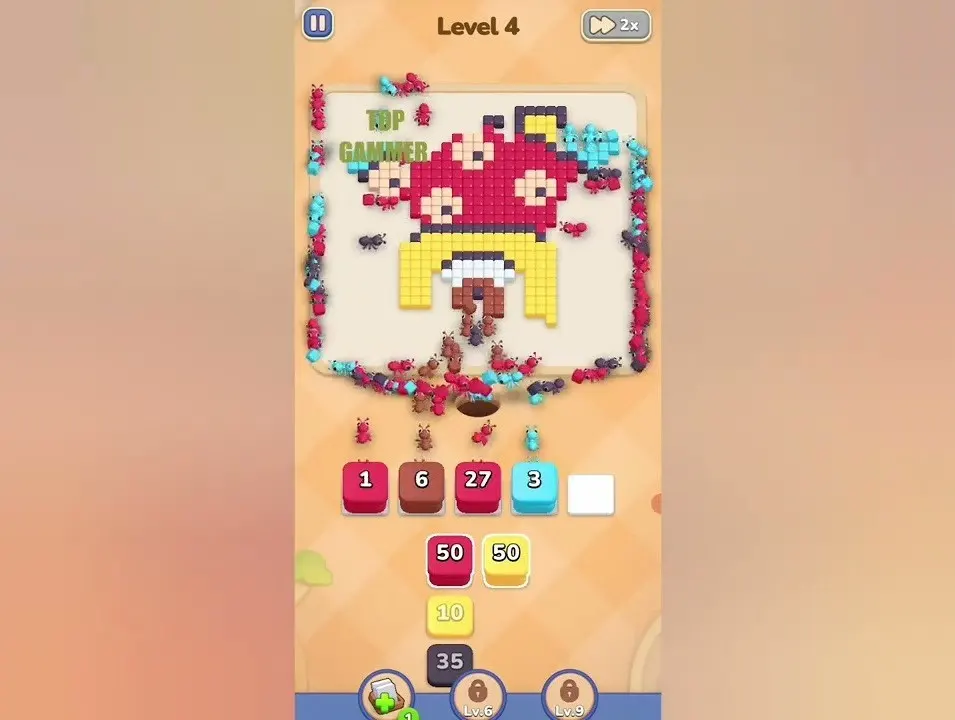
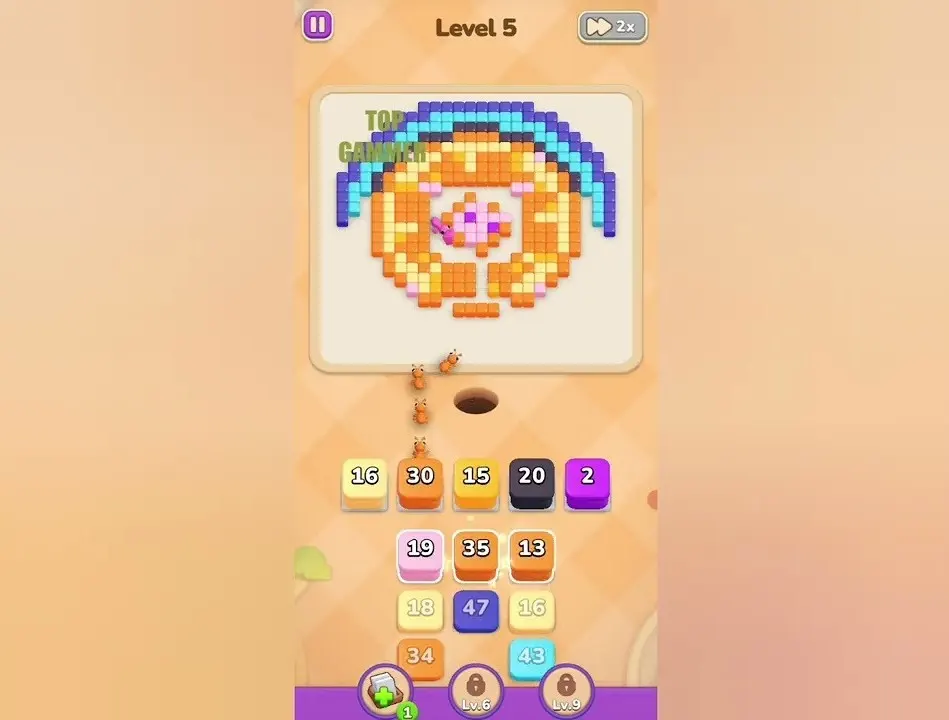
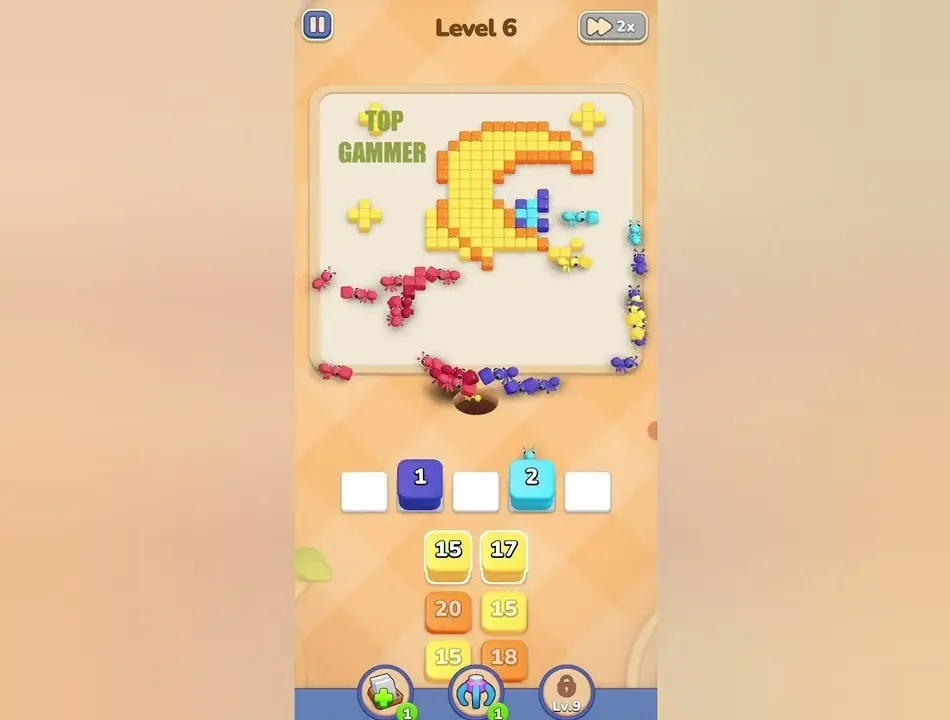

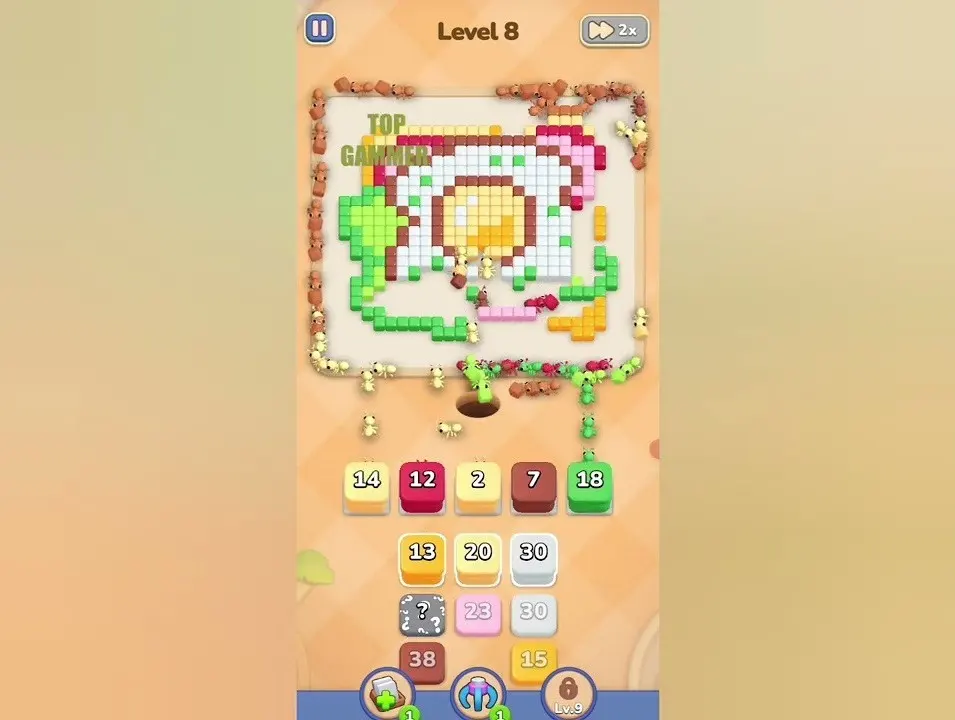
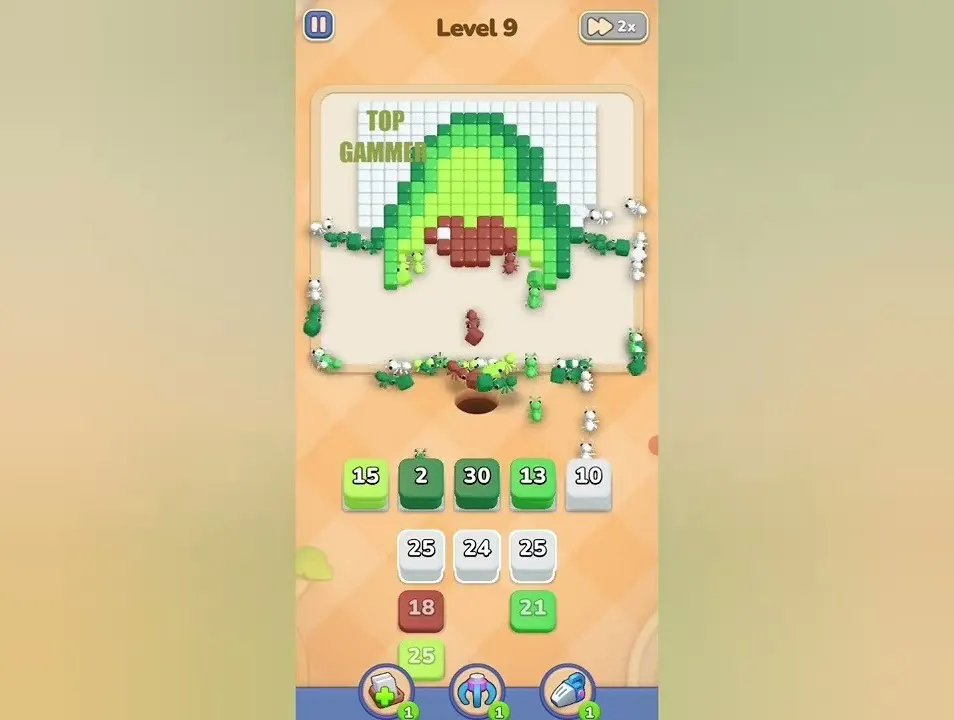
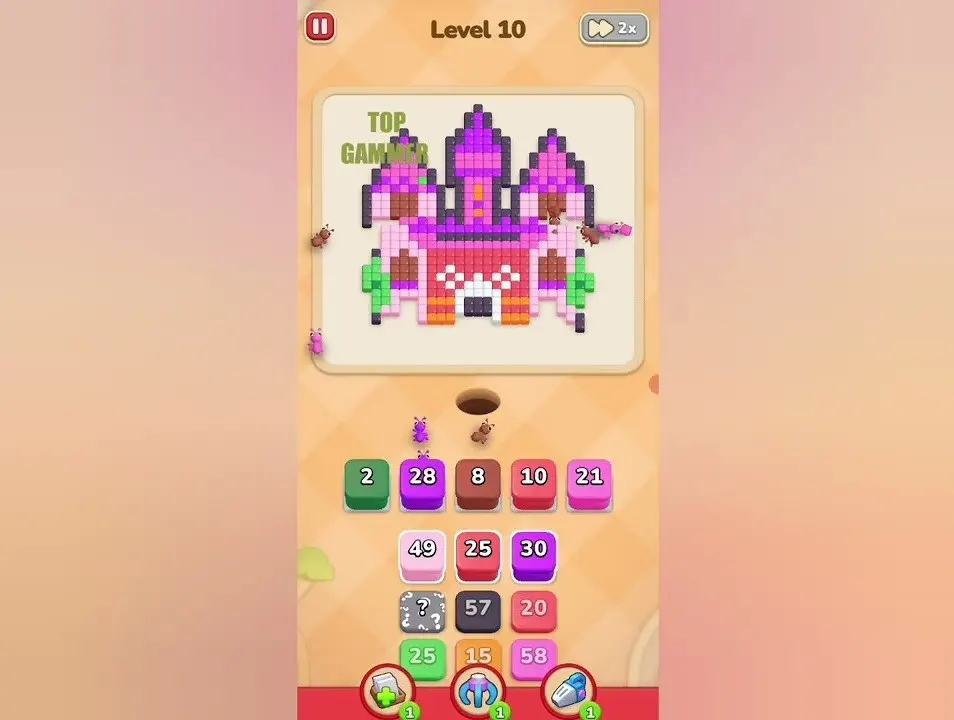
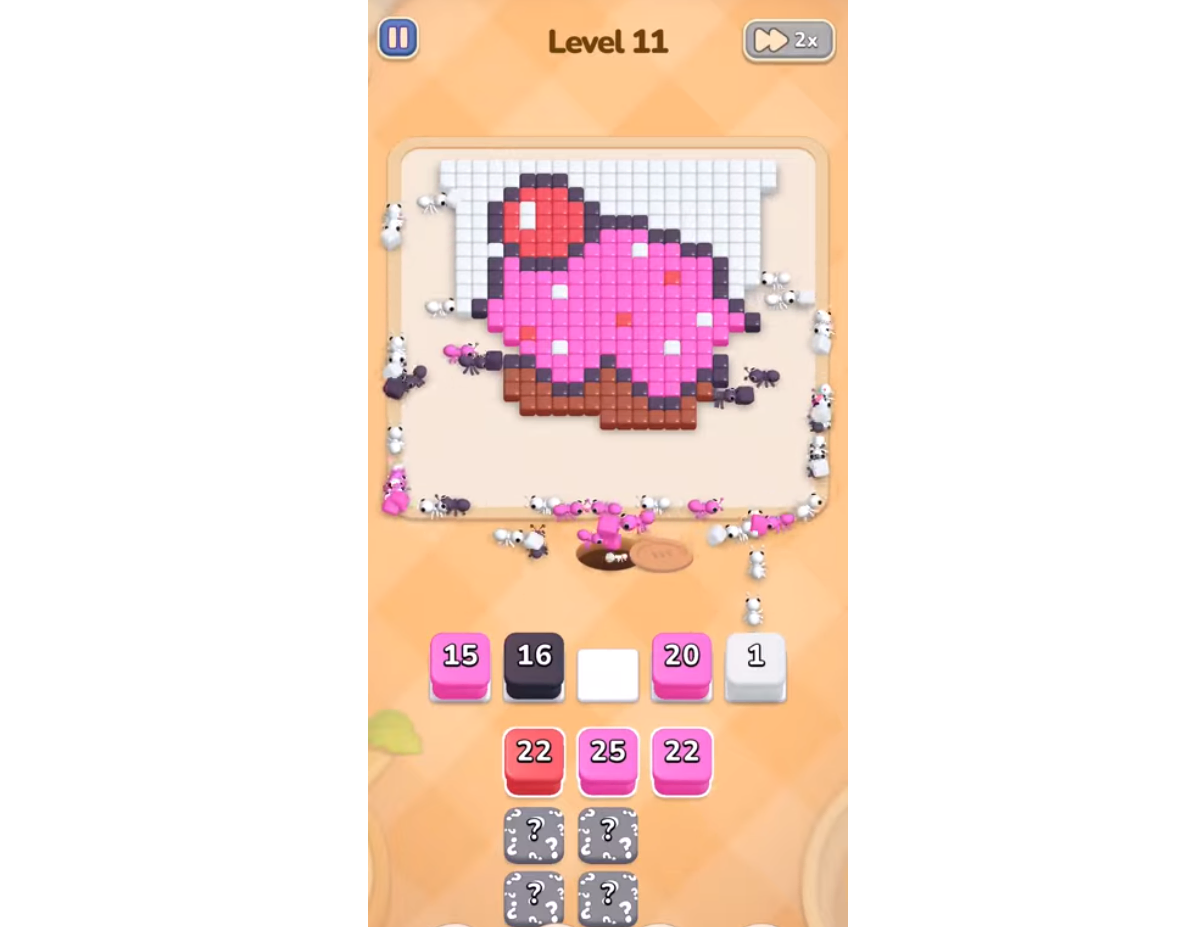
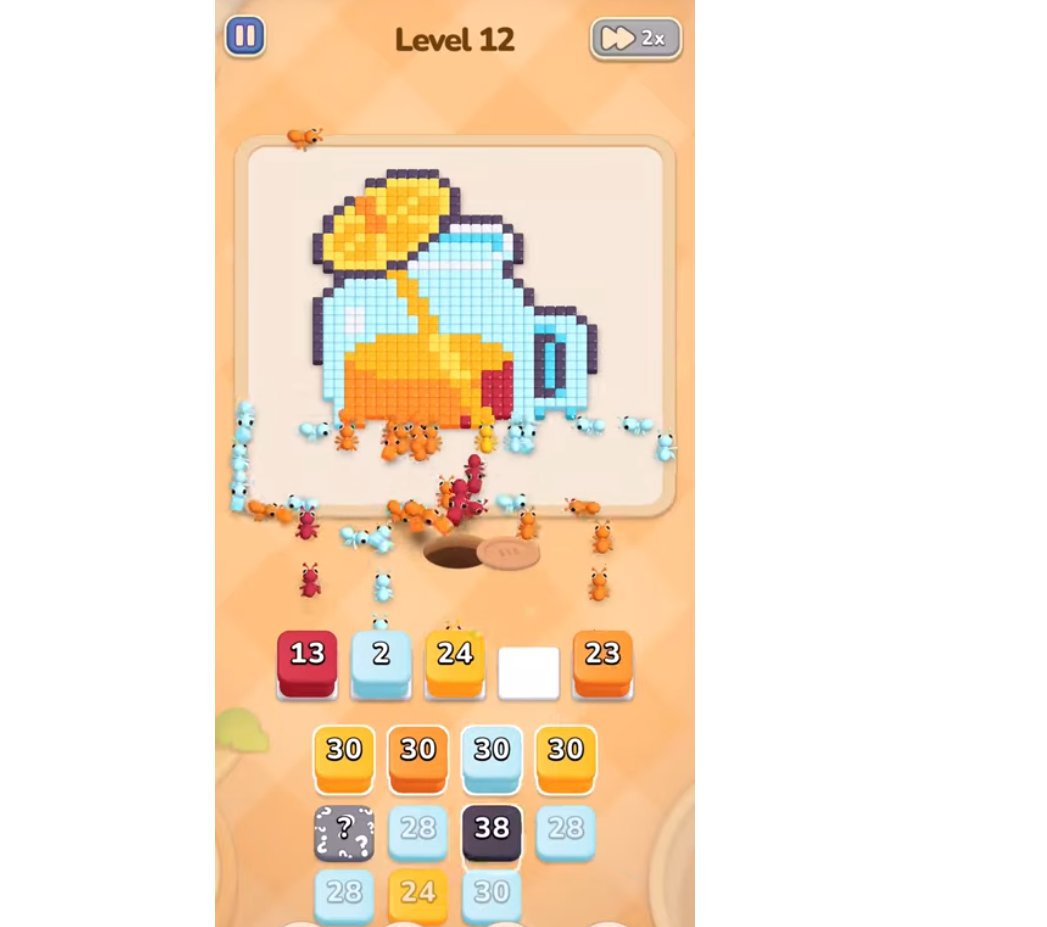

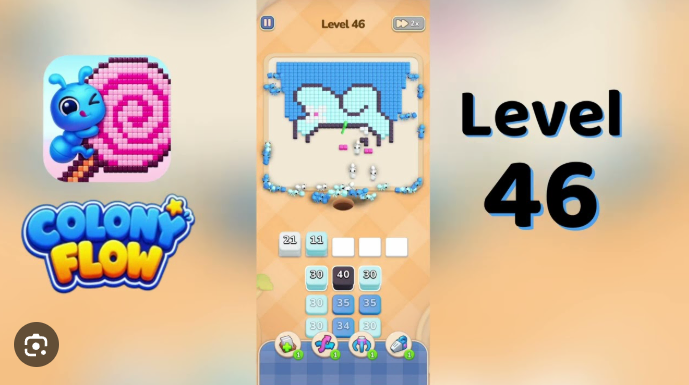
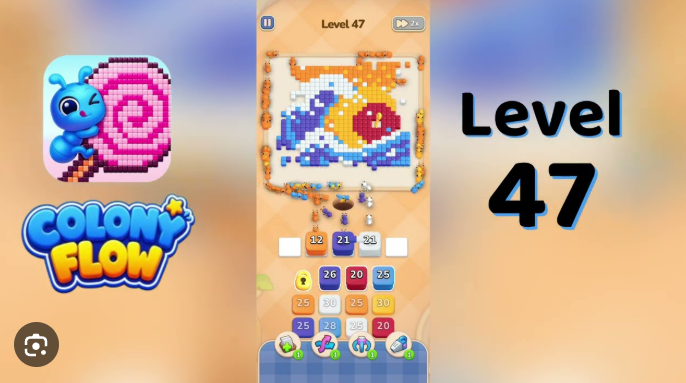
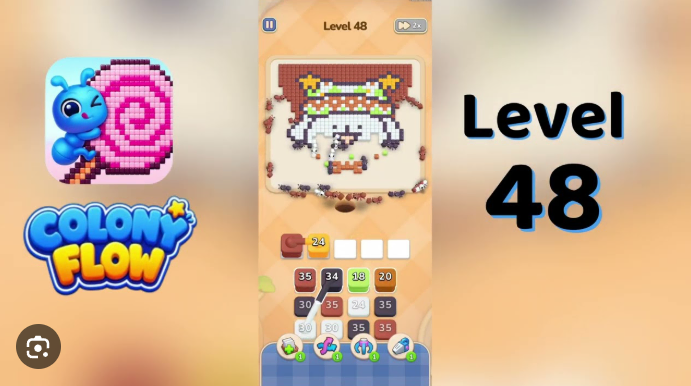
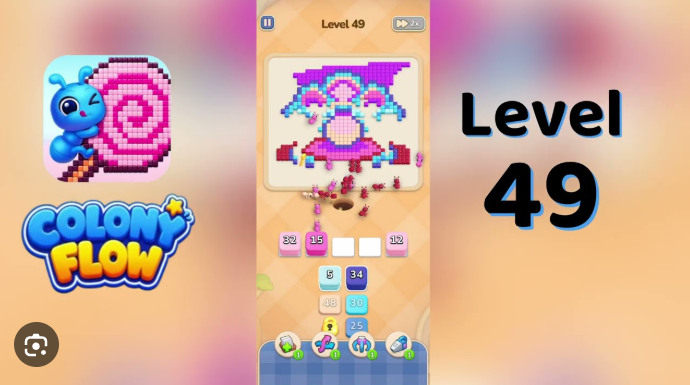

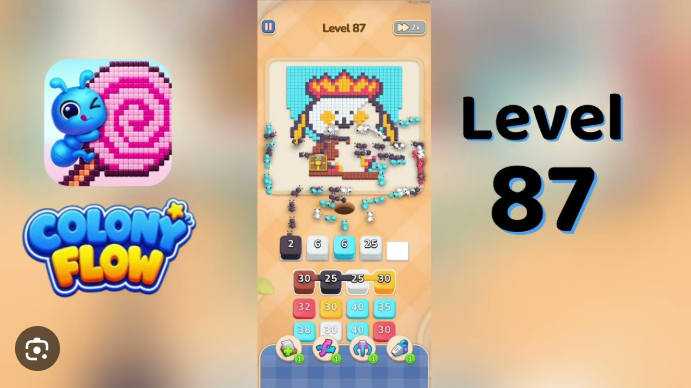
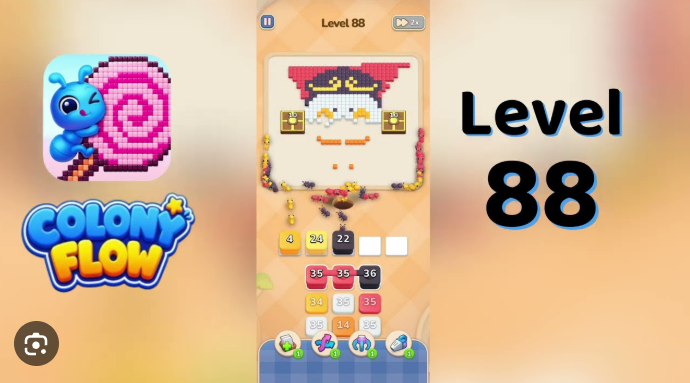
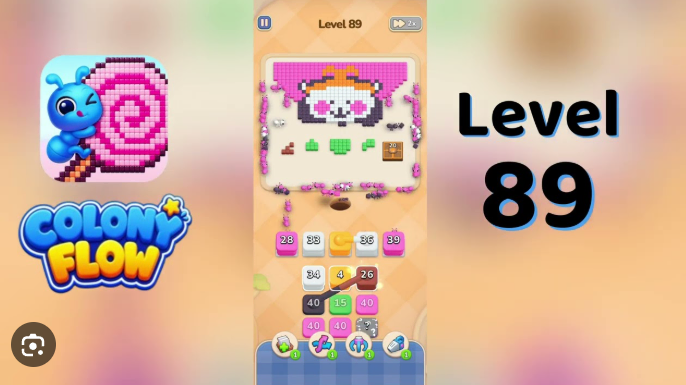
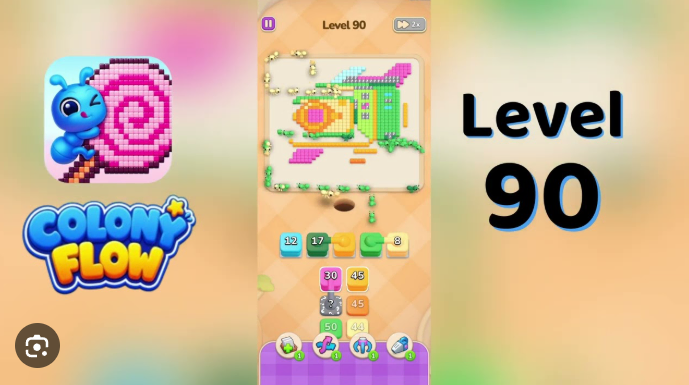



















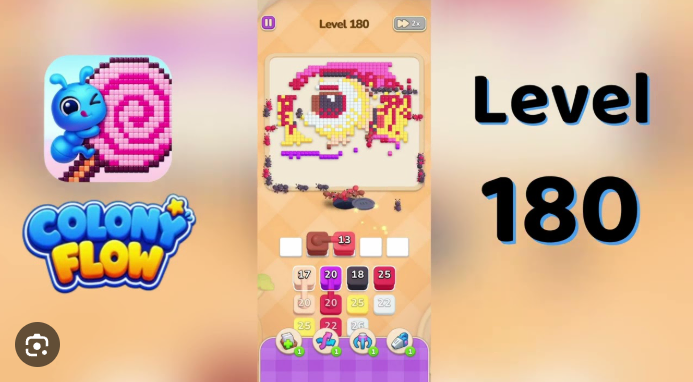
Colony Flow Level 119 treats magenta side blocks as pure endgame obstacles, meaning you’ll need to route your primary flow path before addressing them.
This walkthrough breaks down the clearest play sequence: establishing your main color channels first, then using remaining space to connect magenta endpoints without disrupting your core layout. The key mechanic here is spatial reservation—identify where magenta must eventually travel, but don’t commit those tiles until your other flows are locked in.
This approach prevents the common mistake of building around magenta too early and boxing yourself into unsolvable configurations.
Colony Flow Level 119 Walkthrough
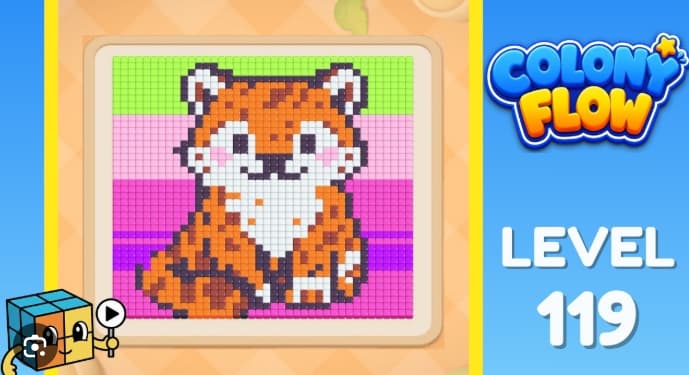
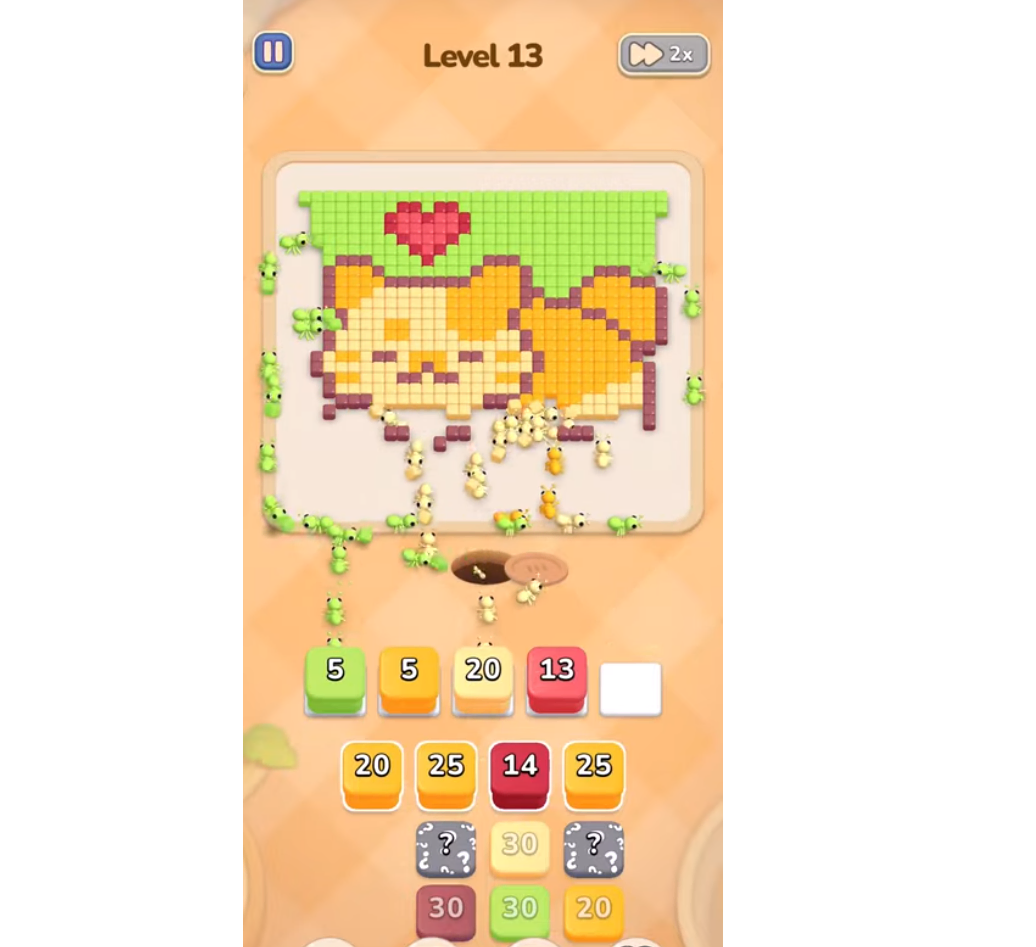
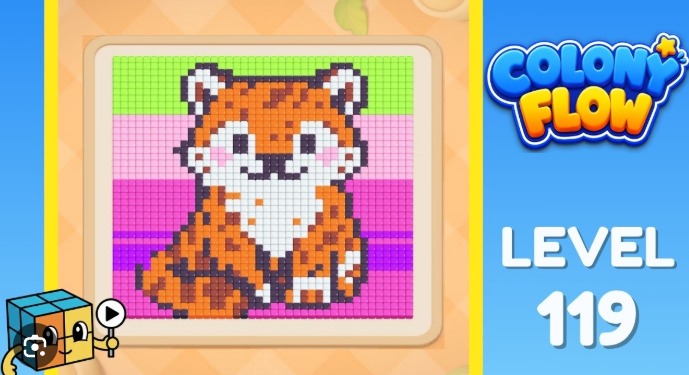
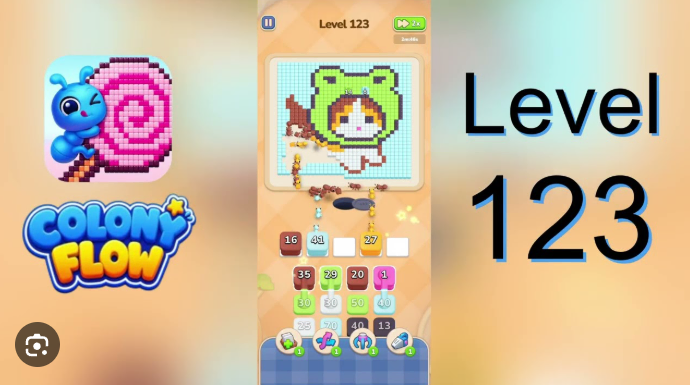
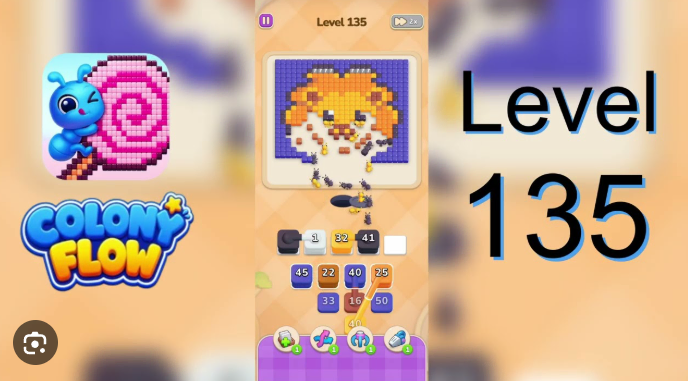
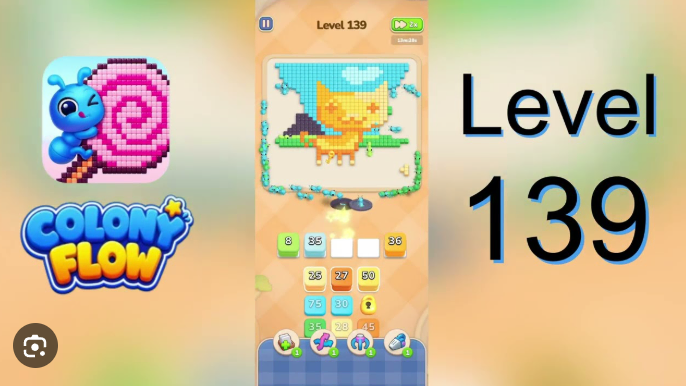
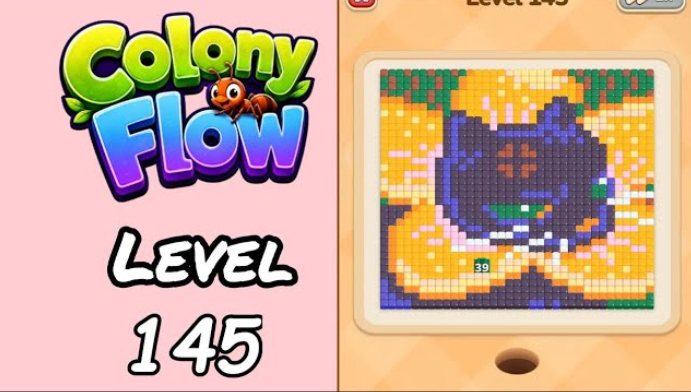
Colony Flow Level 119 is a seated fox portrait where the lime 30 opener wraps the top border first. The magenta side blocks, orange fur, white muzzle, and late black whiskers all compete for one hole and one brief active-row buffer window, so color order determines whether the level clogs or clears.
Start with lime 30 from the middle source shelf. Let that first green wave build the top border above the fox ears before promoting any body color. Feed the promoted lime active-row refills as they appear, then bring in gray 26 and the early pale-pink stacks to open the ear-side wedges and side rails while the green crown route wraps the frame.
Step-by-Step Solution
Tap lime 30 from the middle source shelf.
Keep feeding its active-row refills until the lime strip wraps above both ears. The fox-body colors look larger, but lime is the real opener.
Use gray 26 and the early pale-pink stacks.
These clear the ear-side wedges and side rails while the green border remains active.
Start magenta after the upper rim is mostly stable.
Fill the left and right side blocks and the short bars on the right edge. Pause between taps if the single hole is crowded.
Send brown and orange fur stacks next.
Clear the cheeks, shoulder stripes, and paw-side body cells. These midgame waves are safest once the green and pink families have created space around the center.
Feed white and gray muzzle stacks only after the orange body lanes are open.
Early face traffic parks white ants in front of the whisker route.
Finish with late black outline waves and the last orange crown pieces.
When the whiskers, paw edges, ear caps, and the top orange-black strip clear together, the seated fox portrait resolves.
Common Mistakes
- Sending brown 67/63 or early black outline waves before the lime border wraps the top edge clogs the hole and strands the crown half-finished.
- Releasing white or gray face stacks before magenta and orange open the side and body lanes leaves white ants parked in the middle of the fox.
- Treating magenta side blocks as pure endgame. If magenta waits too long, the right-side bars stay cleared and the last black whisker route has nowhere clean to land.
Board Layout
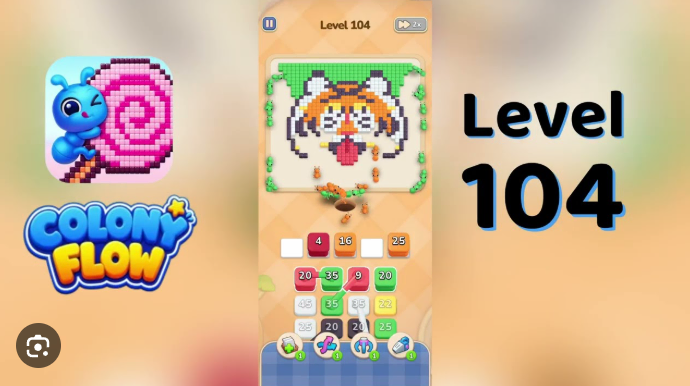
The board opens in portrait view with a seated fox pixel portrait. A lime-green strip spans the top background, pale-pink wedges sit under both ears, two solid magenta blocks occupy the mid-left and mid-right flanks, and the fox uses orange and darker brown fur with a white muzzle and chest plus black outline cells around the ears, eyes, whiskers, paws, and top contour. The single ant hole is centered under the frame, and the active row starts empty.
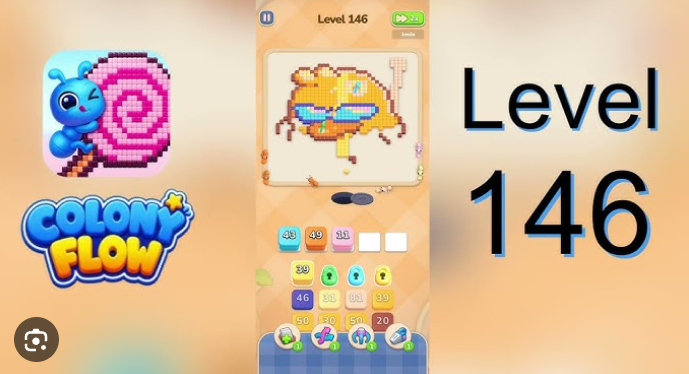
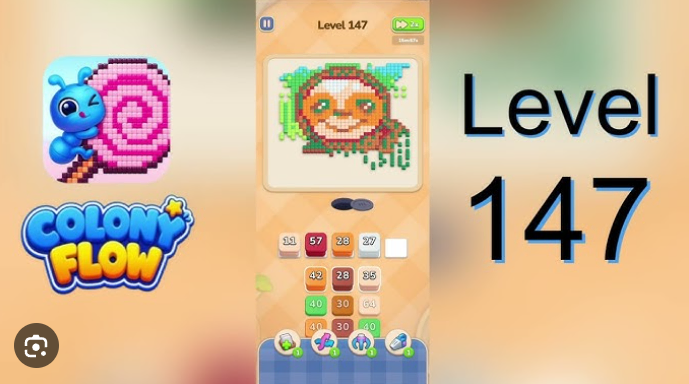
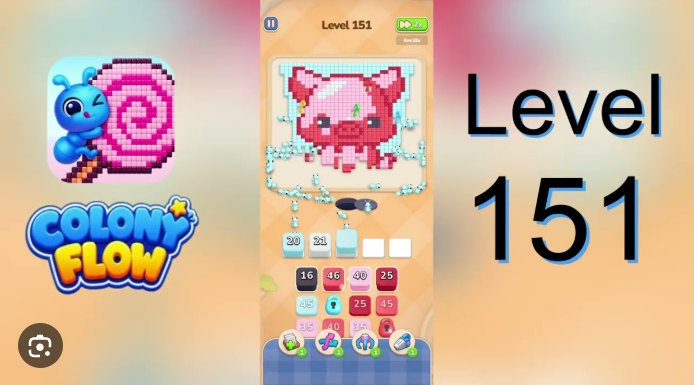
The first visible source shelves show pink 29, pale pink 25, gray 26, and white 25 on the top shelf; black 25, magenta 33, lime 30, and brown 50 on the middle shelf; and purple 30, pale pink 70, brown 67, and gray 35 underneath.
Colors in this level: Green, Pink, Magenta, Orange, Brown, White, Gray, Black
Related Games
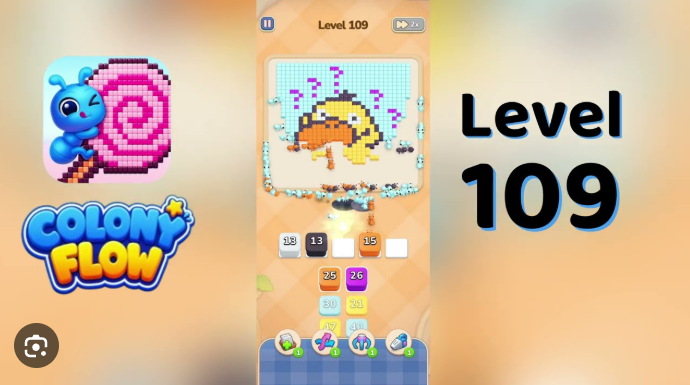
- Colony Flow Level 109 Walkthrough — Level 109 provides a useful contrast because it begins with loaded active rows, while Level 119 requires building its lime crown route from an empty row.
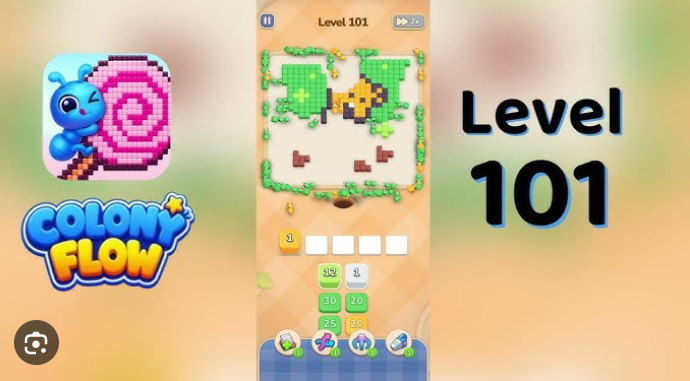
- Colony Flow Level 101 Walkthrough — This later-game walkthrough is a strong follow-up for players who want more single-hole color-order puzzles after mastering Level 119’s delayed side blocks and late outline cleanup.
Why Does the White Fox Face Jam?
White belongs to the muzzle and chest in the center of the portrait. If it enters before the magenta side blocks and orange fur routes are open, white ants park in the middle and delay the late black whiskers and top outline.