
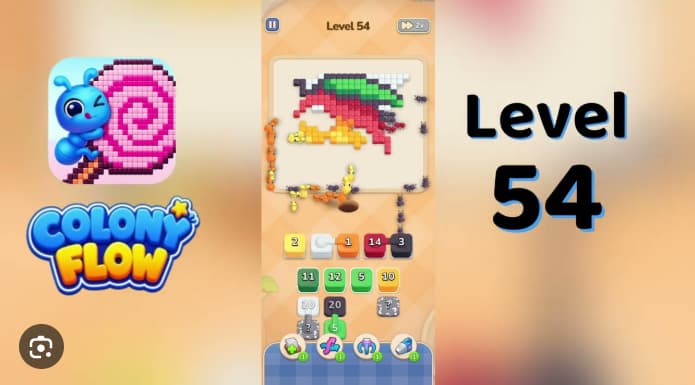
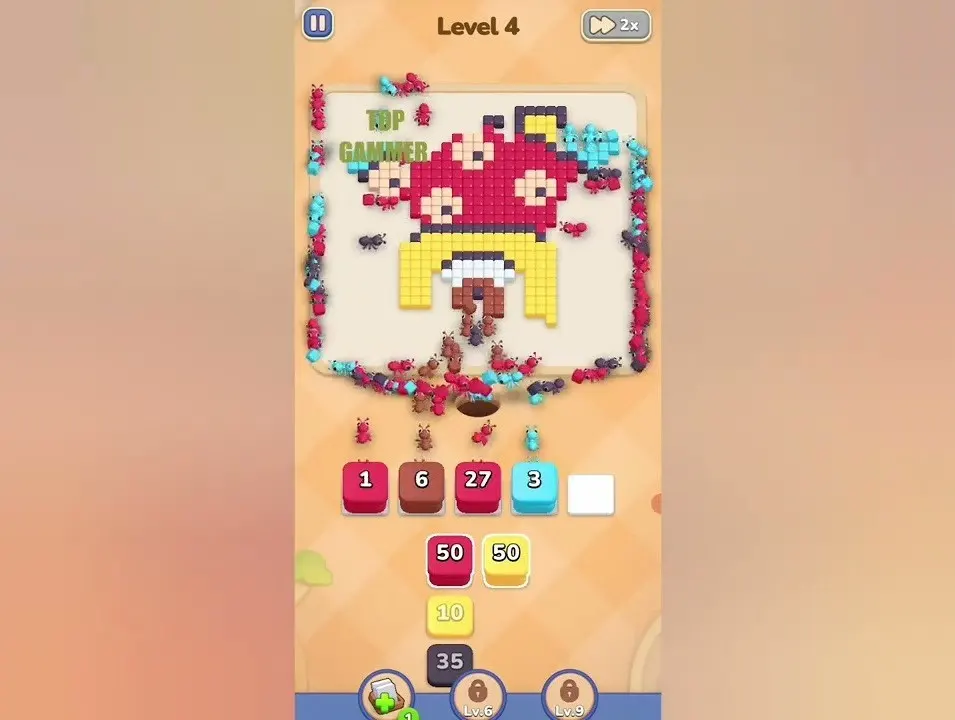
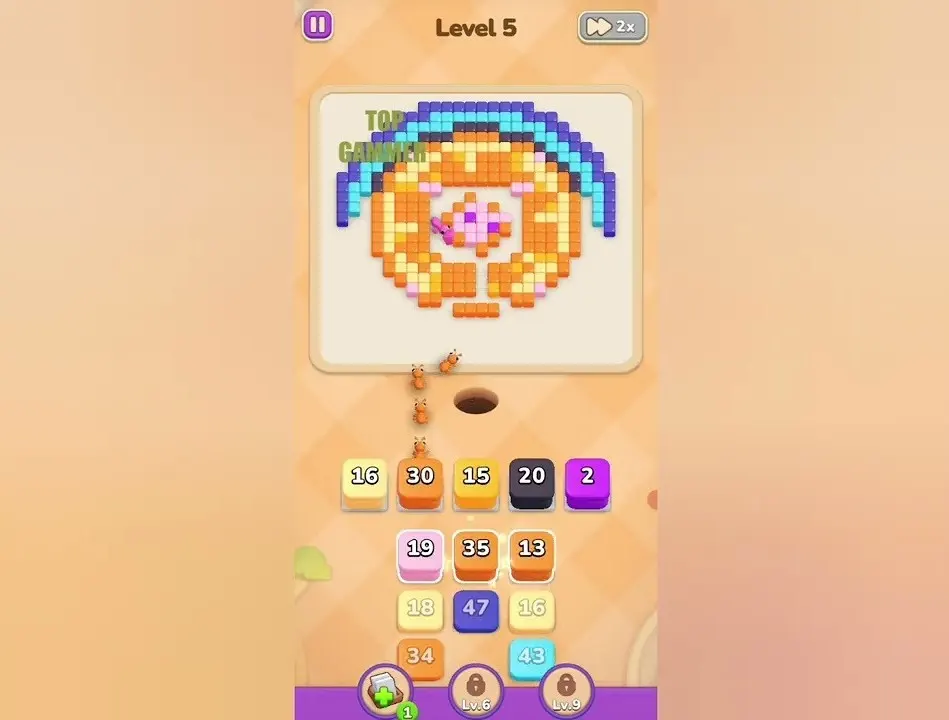
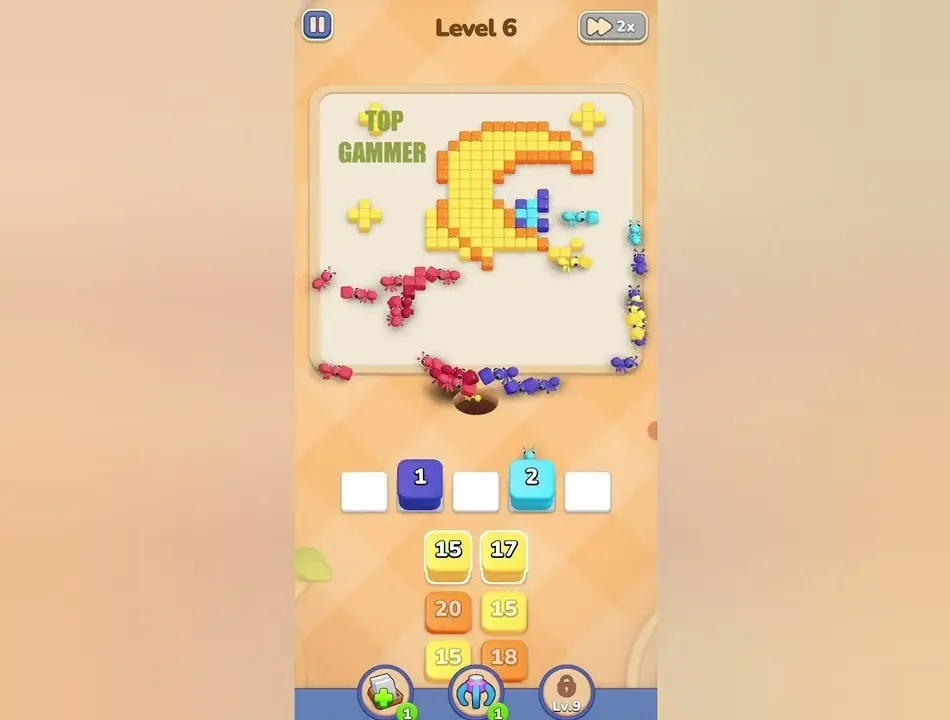
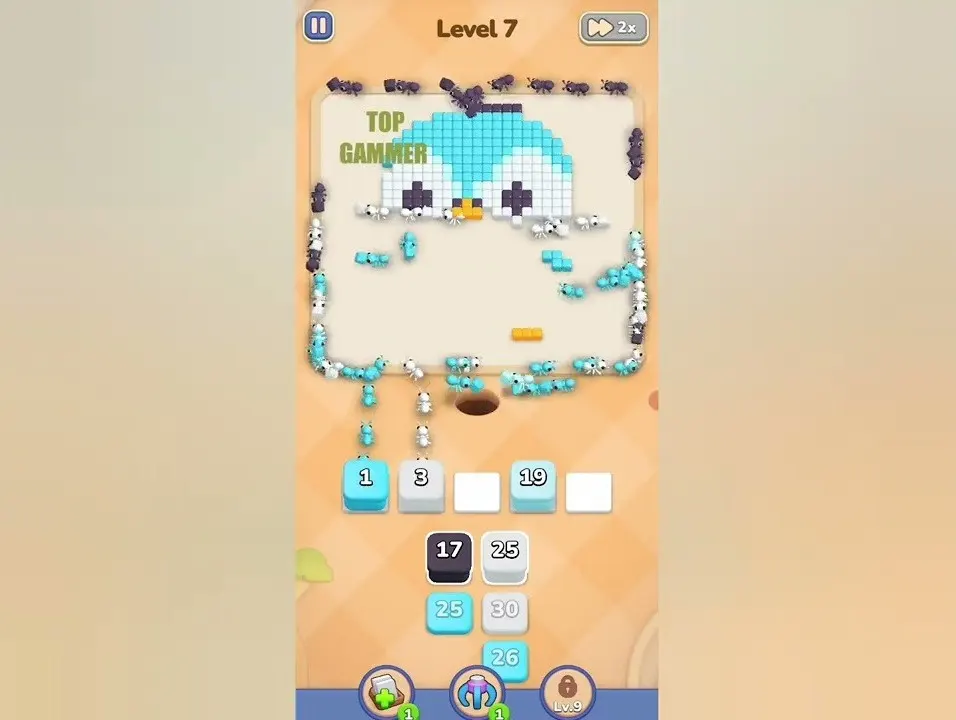
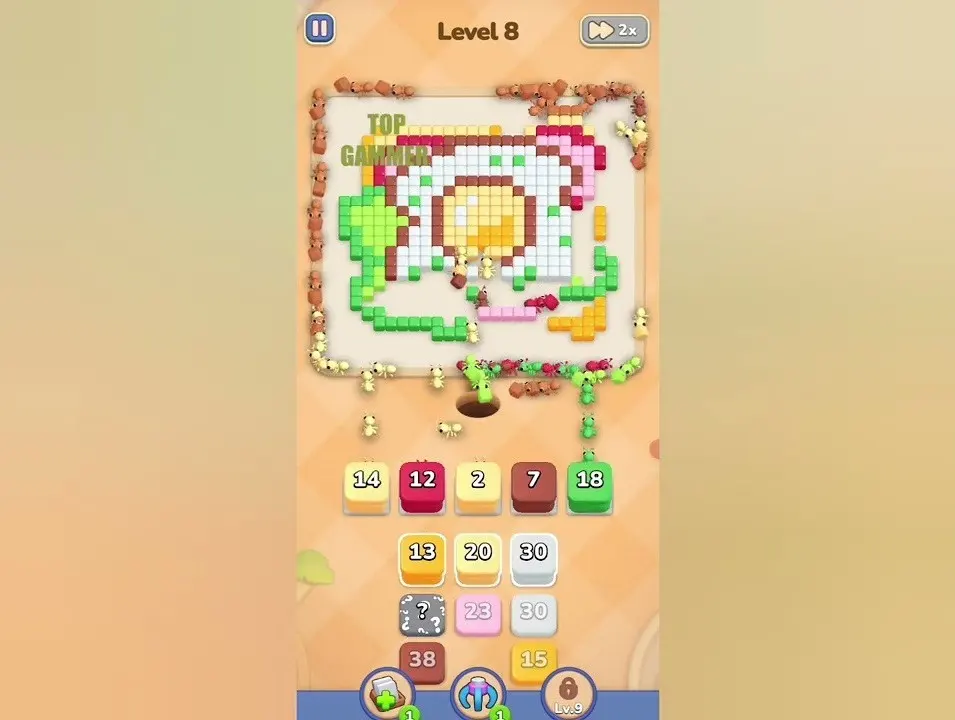
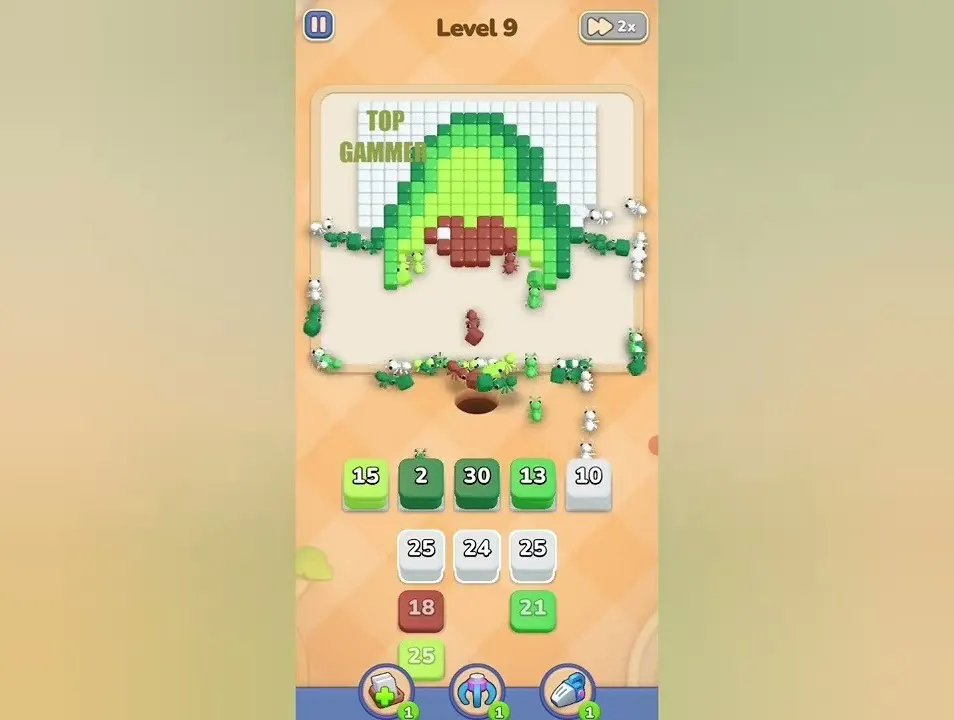
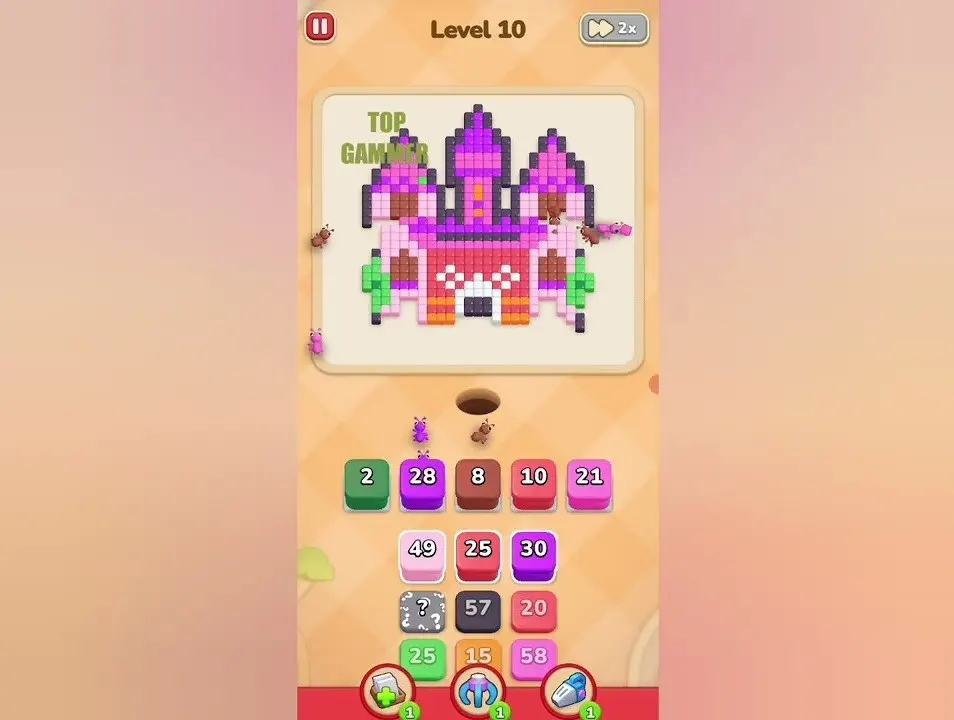
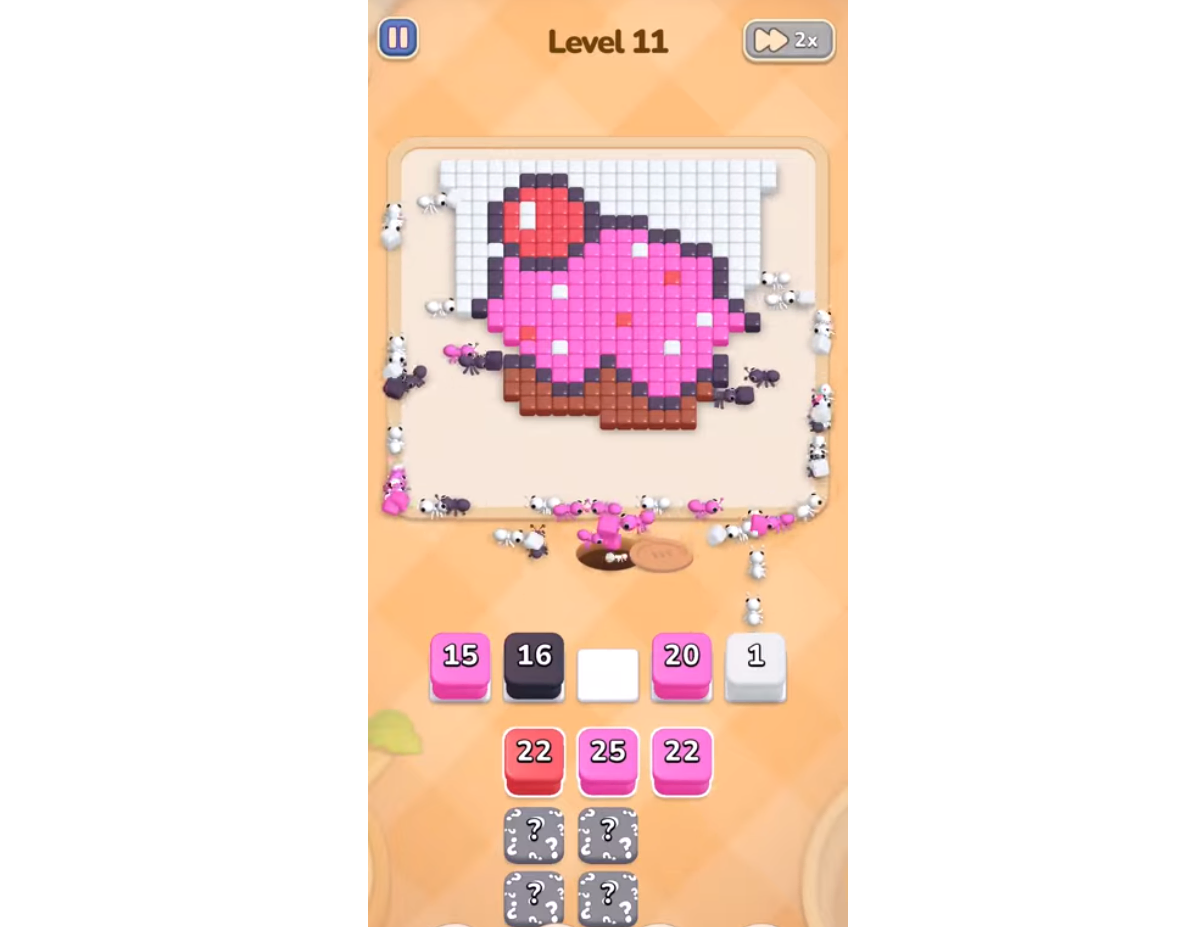
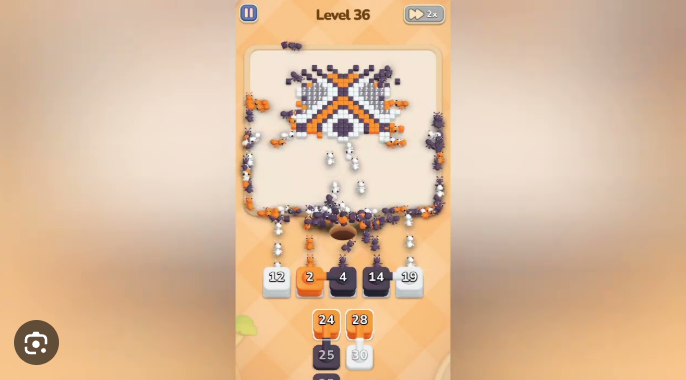
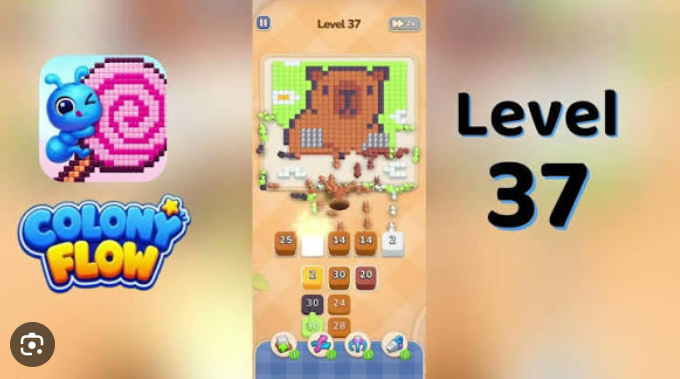
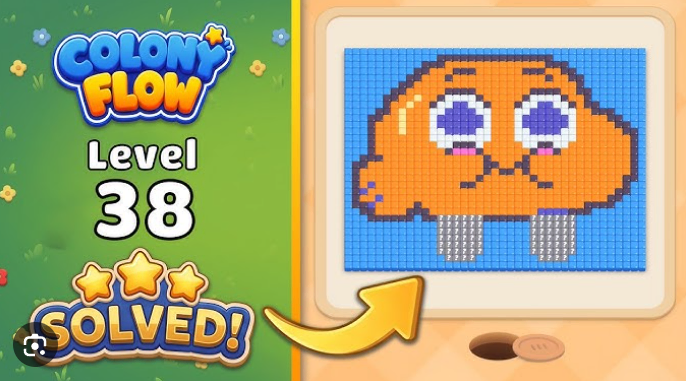
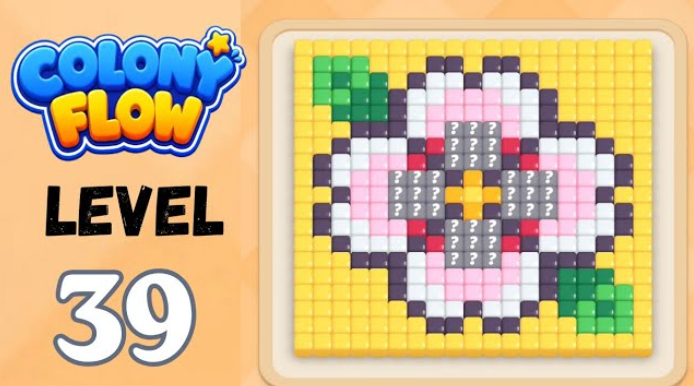
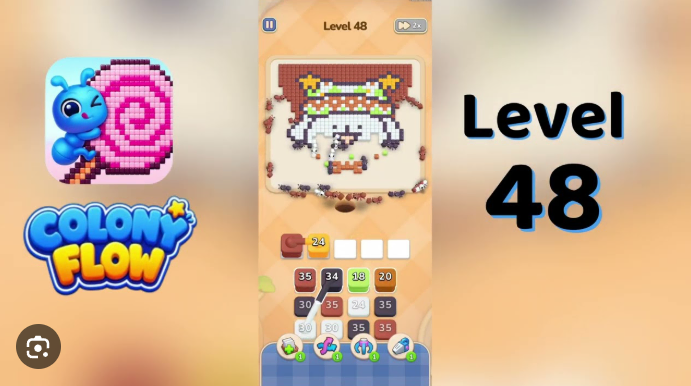
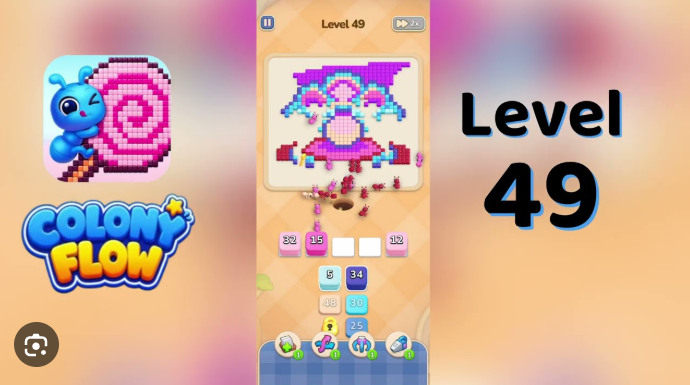
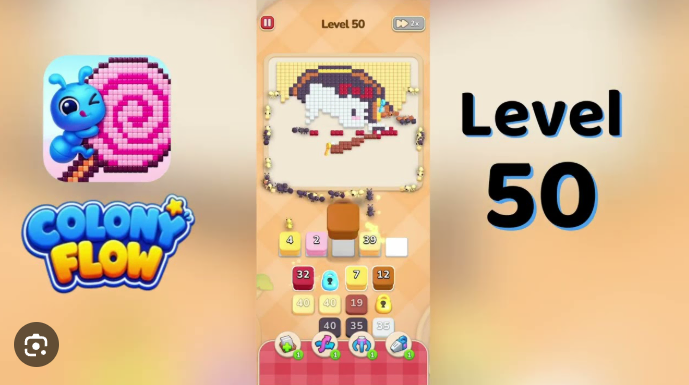
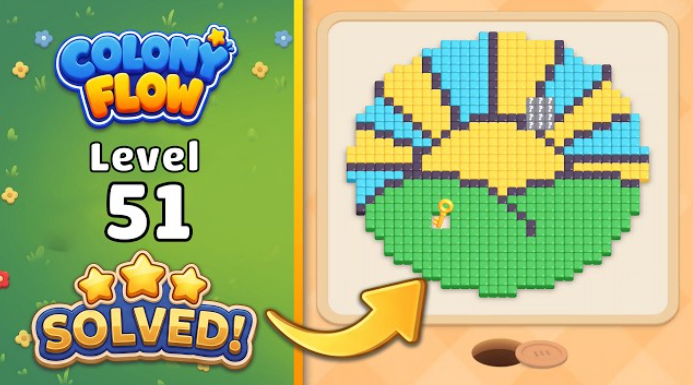
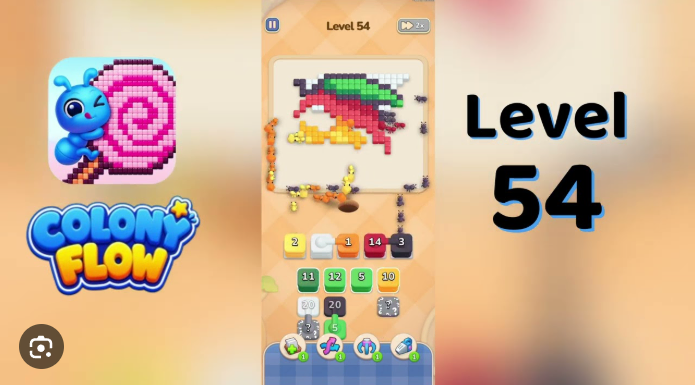
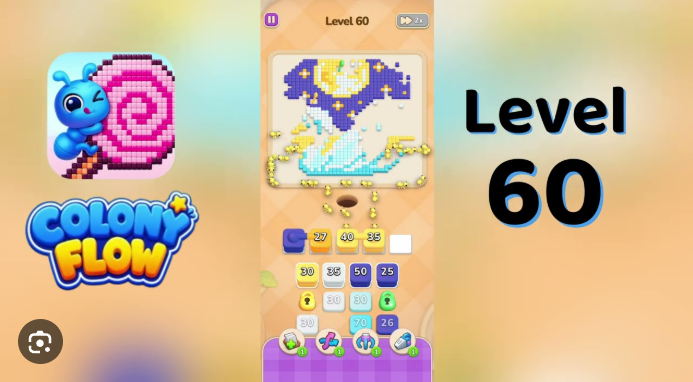
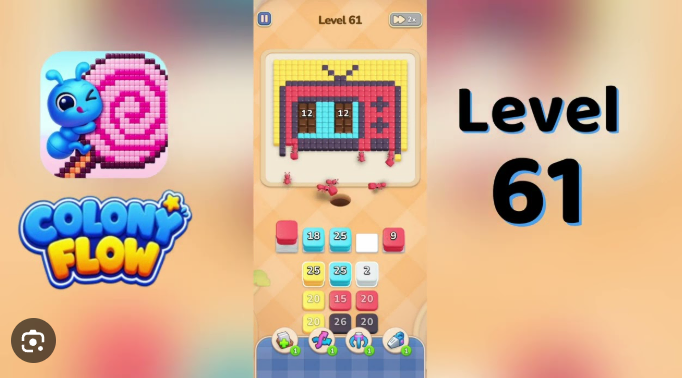
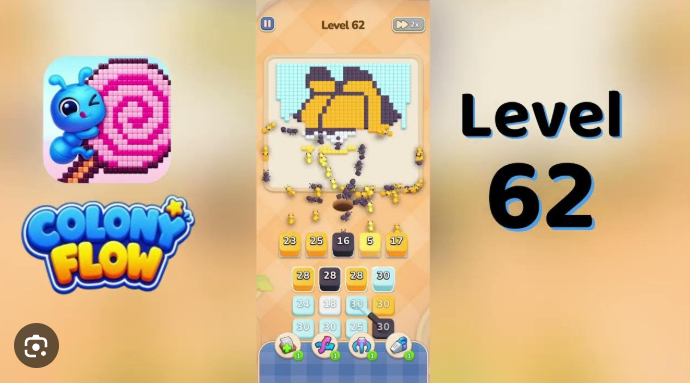
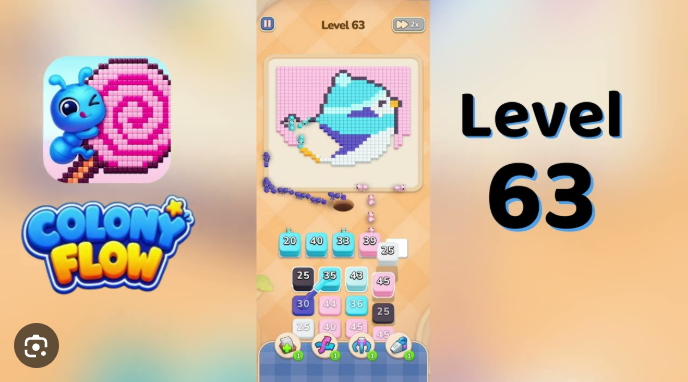
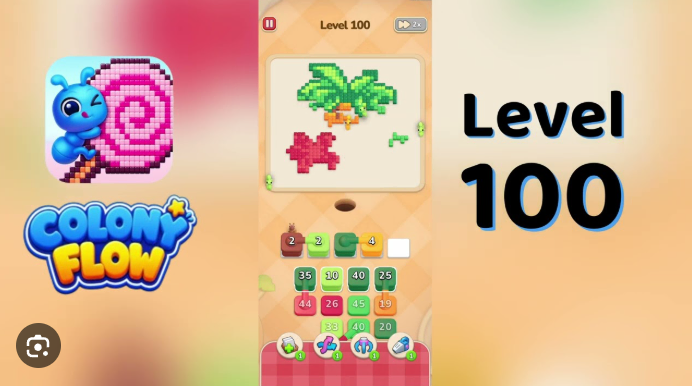
Colony Flow Level 54 is a mango fruit puzzle where all five color zones—yellow upper body, orange middle, red lower half, green leaf, and blue shadow—funel through a single ant hole, requiring precise timing to clear the board.
The critical challenge is triggering the yellow 7 gate at the top of the fruit before the orange 15 middle wave activates, or the entire flow sequence breaks down. This walkthrough focuses on the exact opening moves, gate timing, and color-zone priority that solve Level 54 consistently.
You’ll find the specific tap sequences, which ant holes to clear first, and how to manage the single-exit bottleneck without stalling your flow.
Colony Flow Level 54 Walkthrough
Colony Flow Level 54 uses a mango-shaped board where yellow top, orange middle, red lower body, green leaf, and blue shadow all feed through one shared ant hole and dirt path. The solution requires releasing stacks in order with brief gaps between waves to prevent queuing or stranding.
Start with yellow 7 in the second active-row cell to open the upper body, then orange 15 in the first cell for the middle section.
Stage source row 1 (green 13, blue 11, white 20) into buffer pads with one-beat spacing, followed by source row 2 (green 20, orange 20, blue 20, gray 16), then source row 3 (green 13, orange 5, blue 5, red 16). Hold red 16 until both orange waves have started clearing the middle body.
Step-by-Step Solution
-
Tap yellow 7 in the second cell of the 5-cell active row. This opens the mango’s yellow upper body. Wait until the first yellow ant has cleared the dirt path before releasing another stack.
-
Tap orange 15 in the first active-row cell. This begins clearing the orange middle body and stem. Leave one beat after the yellow wave; do not release source-row stacks while the opening waves are still queued.
-
Send source row 1 as stacks rise into empty buffer pads:
- Green 13, column 1
- Blue 11, column 2
- White 20, column 3
Leave one beat between each wave.
-
Send source row 2 in this order:
- Green 20
- Orange 20
- Blue 20
- Gray 16
-
Send source row 3 in this order:
- Green 13
- Orange 5
- Blue 5
- Red 16
Hold red 16 until both orange waves have started clearing the middle body. Sending red too soon strands ants on the lower half and blocks late red refills.
Common Mistakes
-
Sending orange 15 before yellow 7. Yellow must open the upper fruit section first, or orange clogs the shared route.
-
Releasing green 13 while yellow is still on the dirt path. Let the first yellow ant clear the route before staging source row 1.
-
Tapping stacks before they rise into an empty buffer pad. The source-row order only works when each stack has room to enter the active area.
-
Sending red 16 early. Keep source row 3, column 4 untouched until the orange middle has begun clearing.
Why does yellow come before orange?
Yellow 7 in the second active-row cell is the smallest stack, and the yellow upper body sits directly above the ant hole. Tapping orange 15 first sends orange ants across the top section that yellow still needs to clear, stalling them on remaining middle cells while yellow ants queue behind on the same path.
Related Games
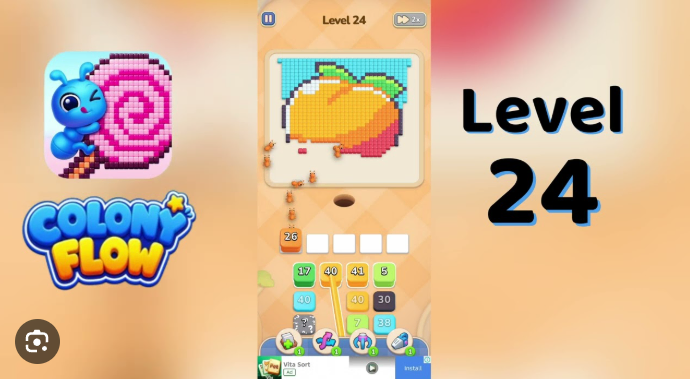
- Colony Flow Level 24 Walkthrough — Continue with another Colony Flow puzzle walkthrough that helps reinforce the timed stack-tapping and buffer-pad staging used in Level 54.
- Colony Flow Level 20 Walkthrough — This walkthrough is a useful follow-up for players who want more practice sequencing colored ant waves without clogging their shared route.
When should I send red 16?
Hold red 16 in source row 3, column 4 until both the orange 15 active wave and orange 20 source wave have started clearing the orange middle body. The red lower half is the largest fruit region, and red ants share the dirt path with orange, yellow, and green. A premature red release strands ants on remaining lower cells and blocks every later cleanup refill.