




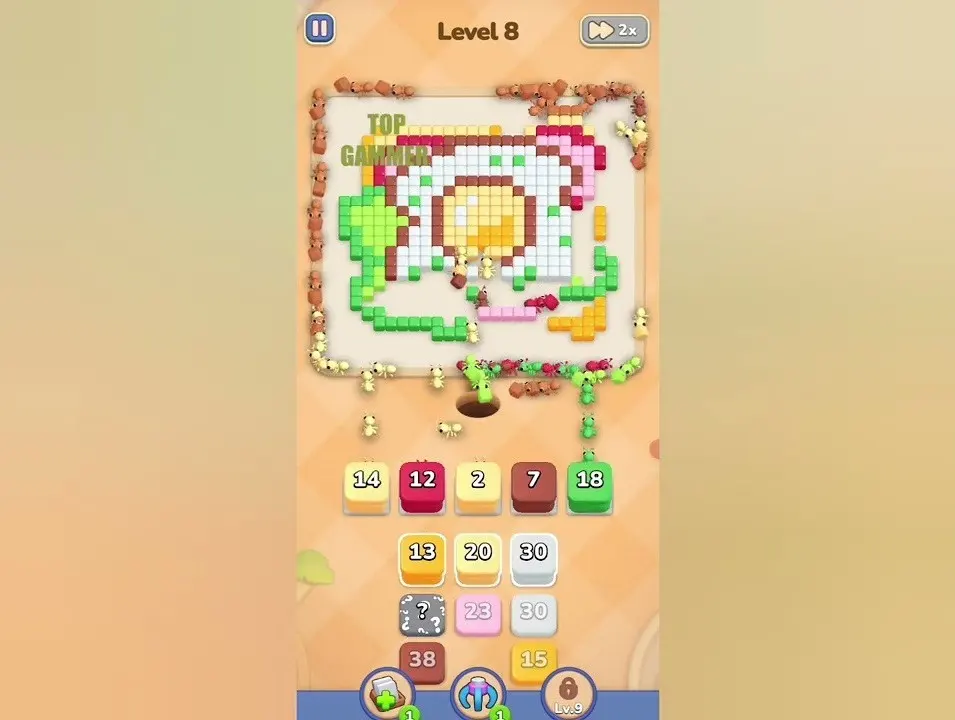
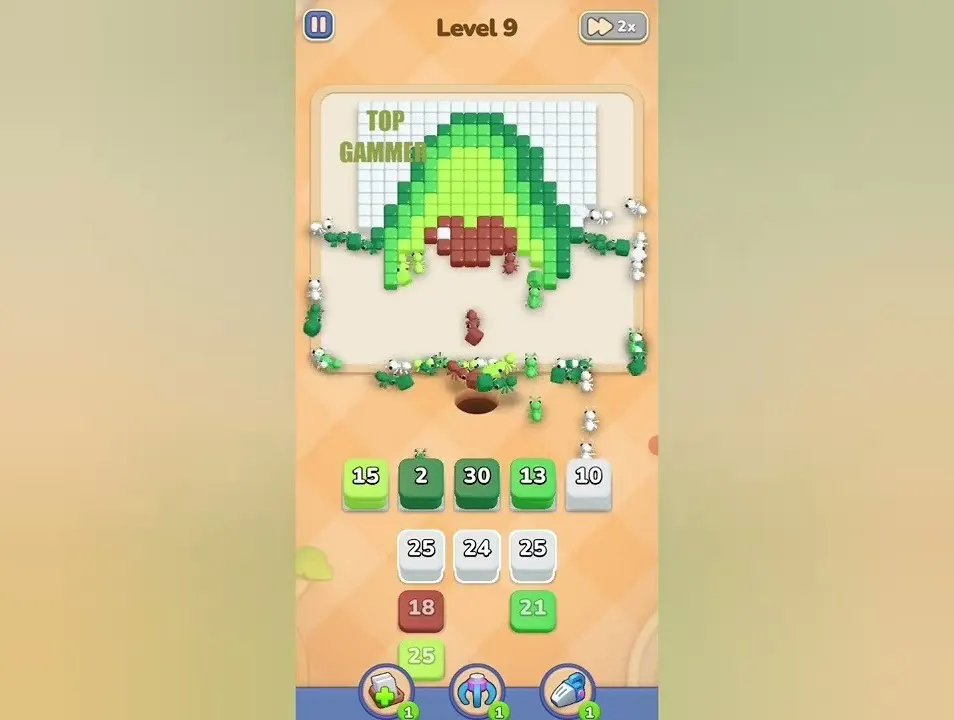
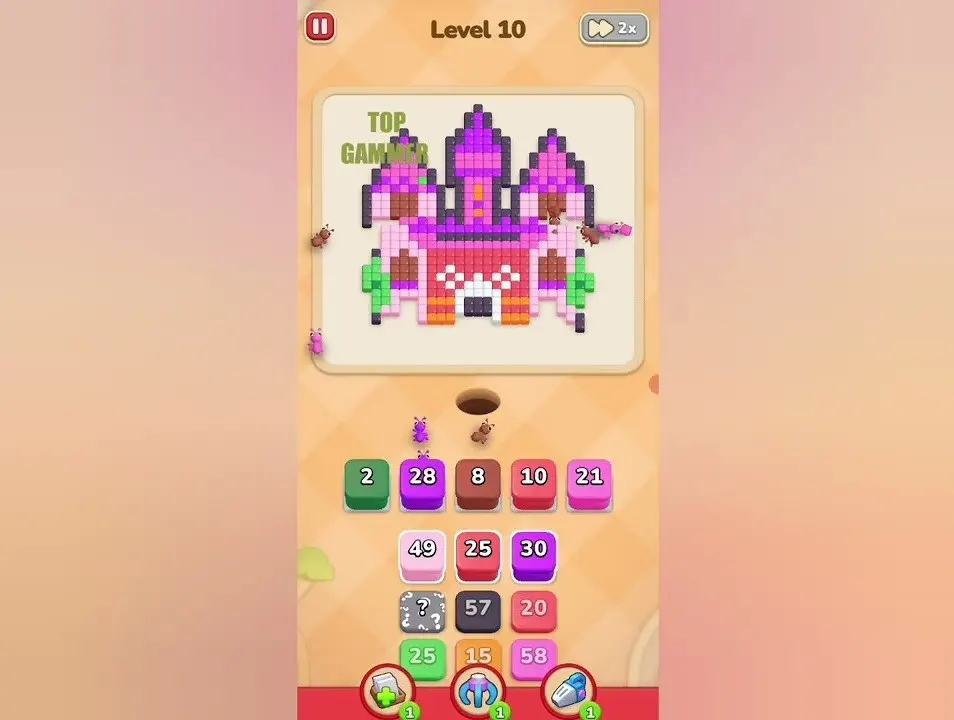
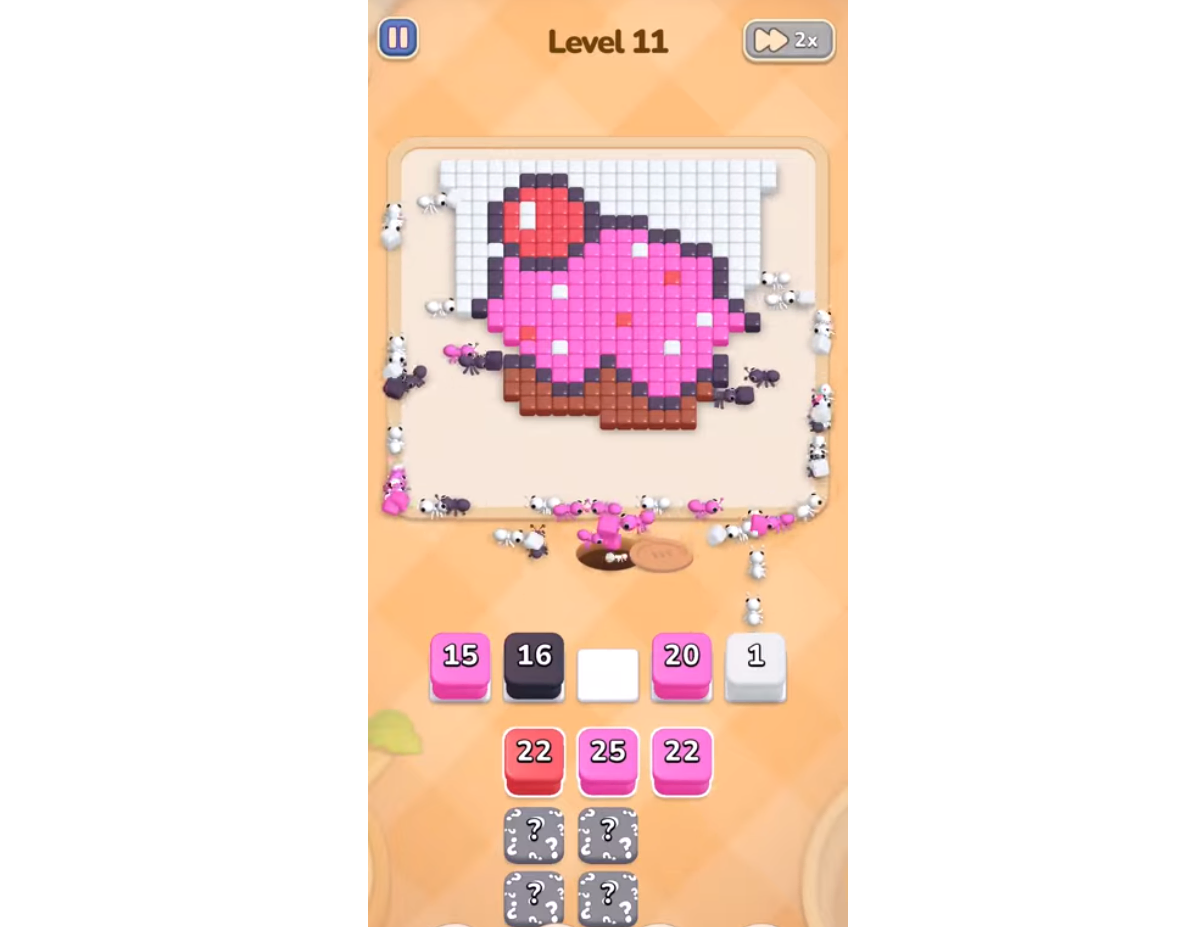


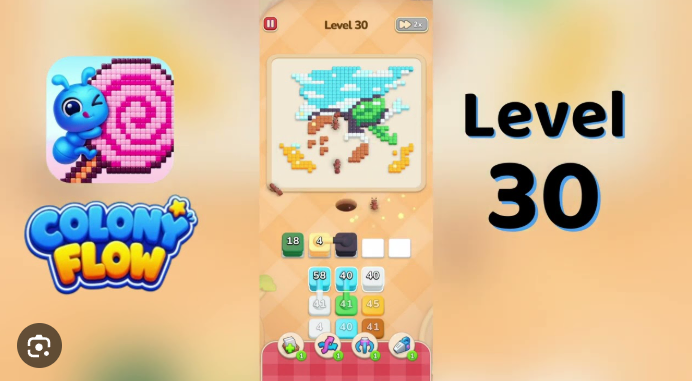


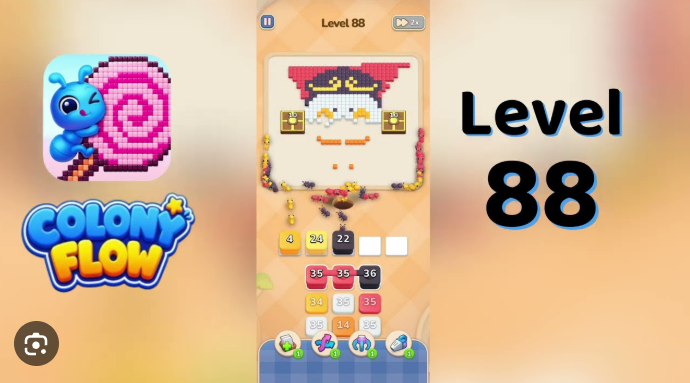
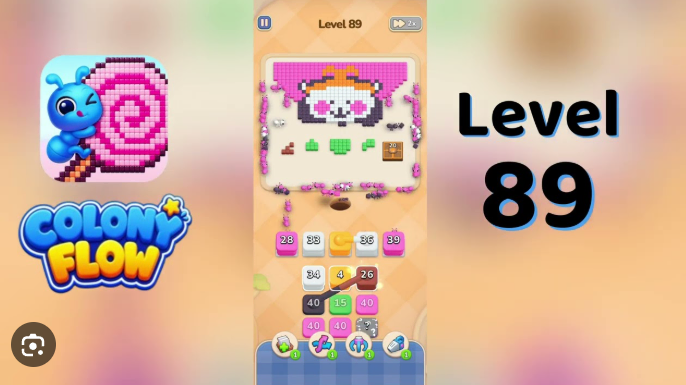
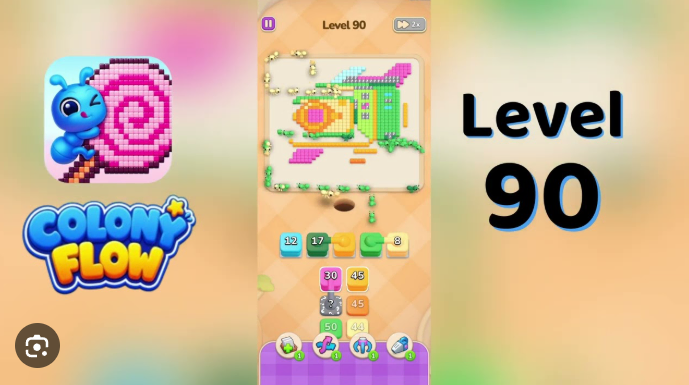
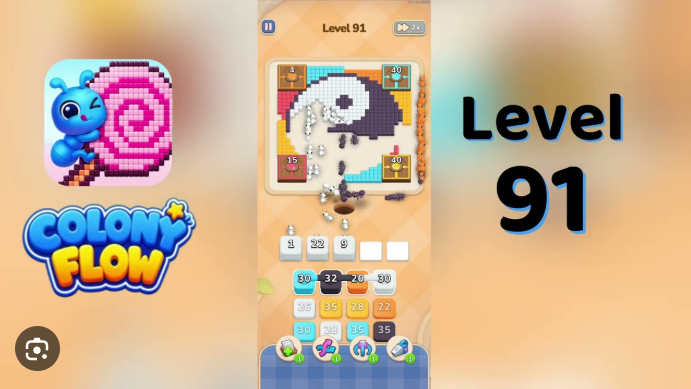
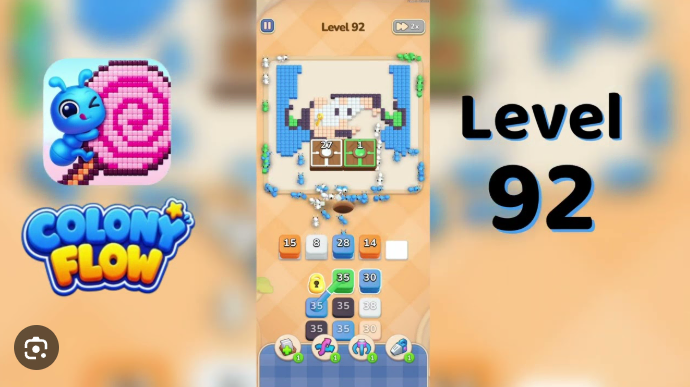
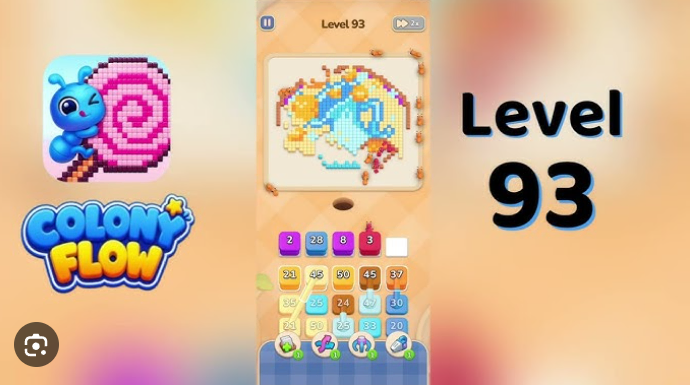
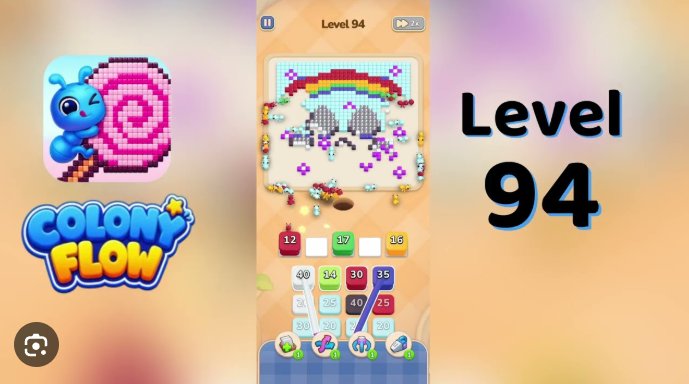
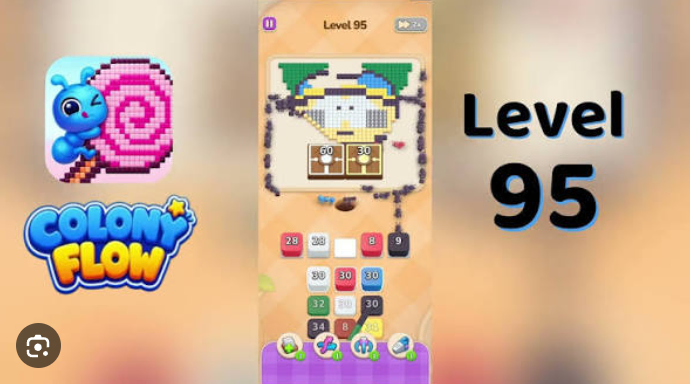
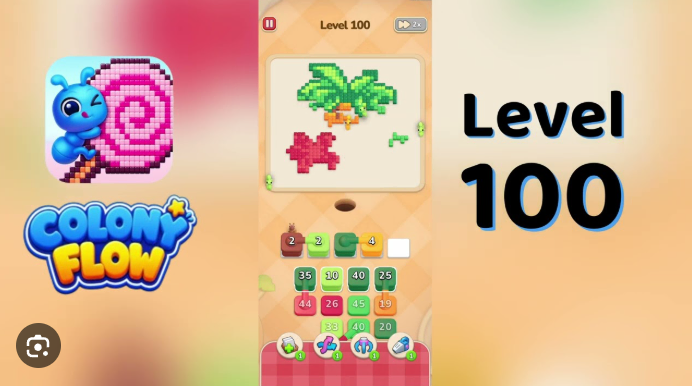
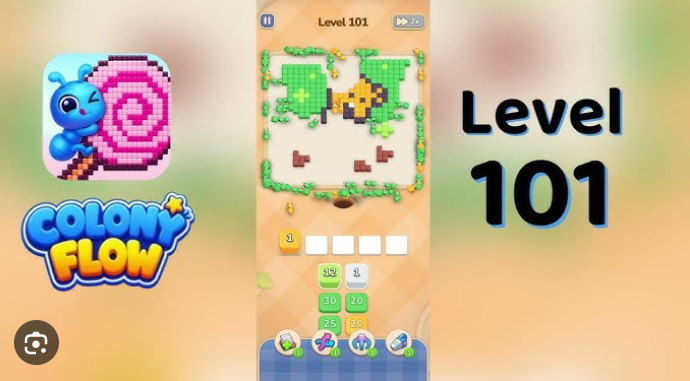
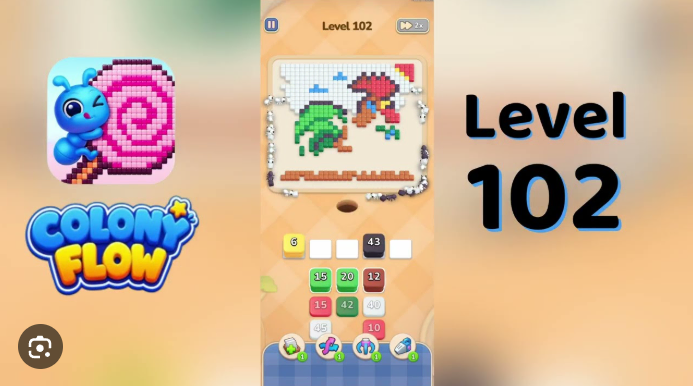
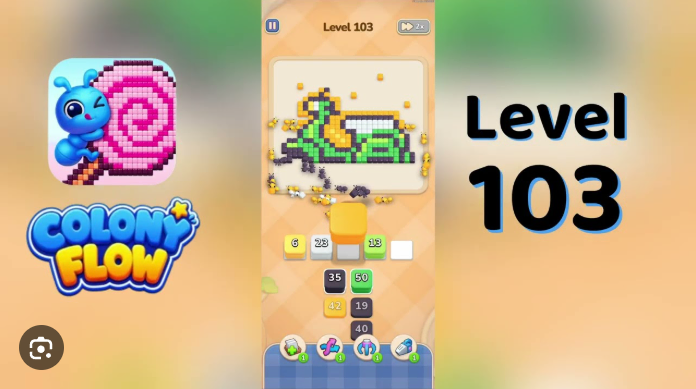













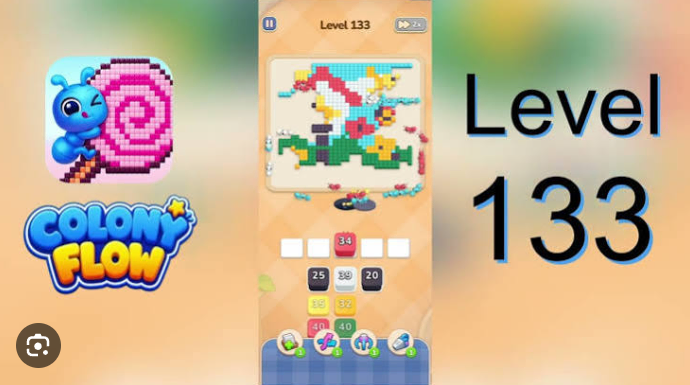
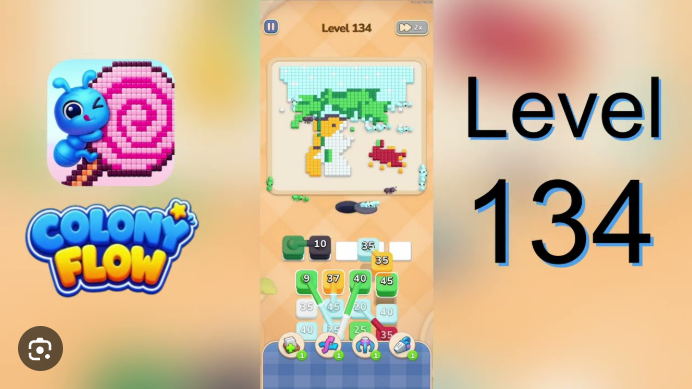

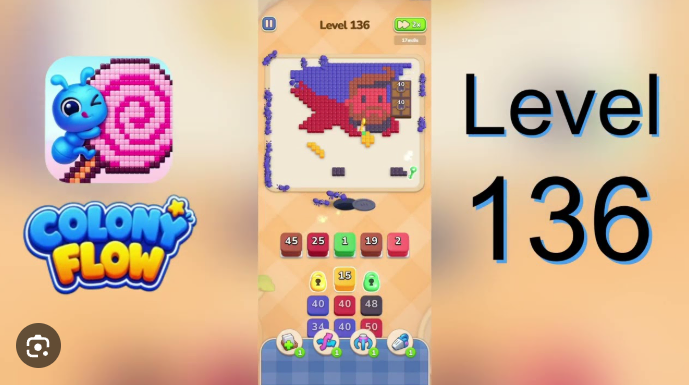
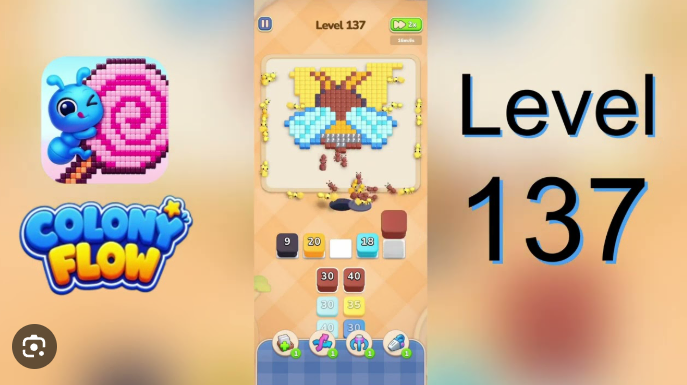








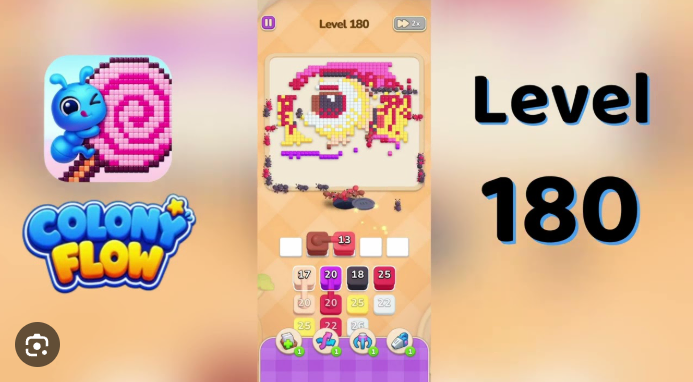
Colony Flow Level 30 is a puzzle stage that challenges you to connect power sources to all colonies while managing limited space and intersecting paths.
This walkthrough breaks down the optimal solution step-by-step, showing you where to place each flow path to complete the level without wasted moves. The key to beating Level 30 is understanding the board’s layout before you start connecting.
You’ll need to route multiple colors simultaneously while preventing paths from blocking each other, which requires planning your moves in a specific sequence.
How to Play Colony Flow! Level 30 Walkthrough
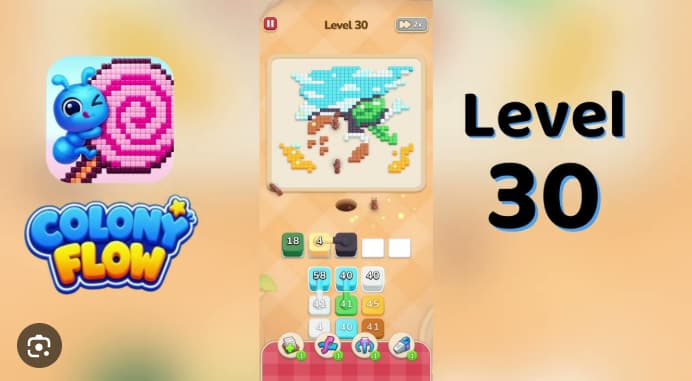
Colony Flow! Level 30 is a coconut-scene puzzle where eight colors—yellow, dark green, black, white, brown, light blue, light yellow, and gray—share a single dirt path. The perimeter colors must clear first to avoid blocking later waves.
Tap yellow 28 in the far-left cell of the top row. Yellow ants clear the sand strip along the coconut’s bottom edge. Wait for the nearest sand cells to begin clearing.
Tap dark green 100 in the second top-row cell. This wave clears the palm-leaf cluster. Leave a beat between yellow and dark green so the sand mostly clears before the leaves start.
Tap black 35 in the third row, third cell. Black clears the dark outline around the coconut. Wait for dark green to move through before opening interior colors.
Keep the three empty slots in the top row open. They hold rising refill stacks. Tapping brown, white, light blue, light yellow, or gray too early can strand later refills.
Once the perimeter has mostly cleared, tap white 45 in the second row, third cell. White clears the bright flesh in the center.
Tap brown 45 in the second row, second cell, then brown 50 in the fourth row, third cell when it rises. Brown clears the shell and stem. Give the white wave room before sending brown.
Finish with light blue 40, light blue 17, light blue 35, light yellow 30, and gray 45 as they become available. Keep one buffer slot free while late stacks rise.
The level ends when every cube routes off, the coconut scene clears, and the completion banner appears.
Quick Tips for Colony Flow! Level 30
- Open the perimeter first: yellow 28, dark green 100, then black 35. This prevents the sand, leaves, and outline from competing for the same path.
- Wait between taps. A short delay is safer than filling the route while ants are still traveling.
- Protect the buffer slots. The three empty top-row slots are staging space for refills, not early-use spaces.
- Save interior colors for mid-game. White handles the flesh, brown the shell and stem, light blue the sky, light yellow and gray the sand and accents.
- Check the full image. Small sky, sand, stem, and accent cells still count toward completion.
Common Mistakes to Avoid
- Filling buffer slots with brown 45, light blue 40, or white 45 before yellow 28, dark green 100, and black 35 clear the perimeter. This strands white and light blue ants behind active waves and leaves the flesh circle and sky squares empty.
- Firing brown 45 while dark green ants are still on the path. This blocks brown ants from reaching the shell and prevents brown50 from clearing the stem.
- Tapping light blue 40 before the palm-leaf cluster clears. Light blue ants cross leaf cells that dark green must clear, stalling at the top of the art.
Related Games
- Colony Flow Level 28 Walkthrough — This late-game Colony Flow! guide is the most natural follow-up for players who need another advanced solution involving careful queue timing and limited buffer management.
- Colony Flow Level 23 Walkthrough — Level 23 provides another mid-to-late progression challenge for readers practicing the color-order planning needed to avoid blocking ant routes.
Board Layout and Goal
The board opens in portrait view. The top half shows a pixel-art coconut: brown shell, white flesh circle, green palm leaves with a brown stem, yellow sand strip, light blue sky with pale blue accents, and a dark outline. Below the dirt strip, the working area has a five-cell top row and three three-cell source rows.
The top row opens as yellow 28, dark green 100, and three empty buffer slots. The second row: light blue 40, brown 45, white 45. The third row: light blue 17, gray 45, black 35. The fourth row: light yellow 30, light blue 35, brown 50.
Dark green clears the palm-leaf cluster. Brown clears the shell and stem. White clears the flesh circle. Light blue clears the sky and sky accents. Yellow and light yellow clear the sand strip. Black clears the outline. Gray clears accent cells on the leaf and stem.